Korean food is easy to love and a little confusing at first. Menus are often only in Korean, many dishes come bubbling in a stone pot, and the side dishes keep arriving without you asking. This list keeps it simple: twenty dishes worth trying on a first trip, with the Hangul so you can point at a menu or search Naver Map, and a rough idea of how spicy each one is.
The short answer
If you only try five things on your first trip, make it these:
- Korean barbecue, especially samgyeopsal (삼겹살, grilled pork belly), with friends.
- Bibimbap (비빔밥), rice with vegetables and egg that you mix yourself.
- Kimchi jjigae (김치찌개), the everyday kimchi stew most Koreans grew up on.
- Korean fried chicken and beer, known as chimaek (치맥).
- Tteokbokki (떡볶이), chewy rice cakes in a sweet, spicy sauce from a street stall.
Prices change, but as a rough guide at the time of writing a bowl of stew or noodles in Seoul is usually around ₩8,000-12,000, bibimbap a little more, and barbecue is priced per portion of meat (usually around ₩18,000-25,000 per 200g serving, with most places asking for at least two).
Easy first dishes
These are mild, familiar and on almost every menu, so they are a safe start on your first day.
- Bibimbap (비빔밥, bibimbap) is rice topped with seasoned vegetables, a fried egg and sometimes beef. Add as much gochujang (red pepper paste) as you like and mix it all together. Dolsot bibimbap (돌솥비빔밥) comes in a hot stone bowl, so the rice at the bottom turns crisp.
- Bulgogi (불고기, bulgogi) is thin slices of beef marinated in soy sauce, sugar, garlic and sesame oil, then grilled or cooked in a shallow pan. Sweet, savoury and not spicy at all.
- Kimbap (김밥, gimbap) is rice and fillings such as egg, pickled radish, spinach, carrot and ham rolled in seaweed and sliced. It is cheap, filling and perfect for a train ride or a picnic.
- Japchae (잡채, japchae) is glass noodles made from sweet potato starch, stir-fried with vegetables and sometimes beef. It is a party dish at home, and you will often see it as a side dish or at market stalls.
- Mandu (만두, mandu) are dumplings, steamed, boiled or pan-fried, filled with pork, tofu, glass noodles or kimchi. Gogi mandu (고기만두) is meat and kimchi mandu (김치만두) is a little spicy.
Soups and stews
A Korean meal often centres on a hot soup or stew served with rice and small side dishes (반찬, banchan), which are usually free and refilled if you ask. Jjigae (찌개) is a thick stew and guk or tang (국, 탕) is a lighter soup.
- Kimchi jjigae (김치찌개, kimchi jjigae) is a stew of aged kimchi with pork or tuna and tofu. Sour, spicy and deeply comforting.
- Doenjang jjigae (된장찌개, doenjang jjigae) is made with fermented soybean paste, tofu, courgette and onion. It is earthy rather than spicy, a bit like a stronger miso soup.
- Sundubu jjigae (순두부찌개, sundubu jjigae) is silky soft tofu in a red, spicy broth, often with seafood or pork and an egg cracked in at the table. Many places let you choose the spice level.
- Samgyetang (삼계탕, samgyetang) is a whole young chicken stuffed with rice, garlic, jujube and ginseng, simmered in a clear broth. Koreans traditionally eat it on the hottest days of summer, but it is good all year.
- Seolleongtang (설렁탕, seolleongtang) is a milky white beef bone soup with thin slices of beef and noodles. It arrives unseasoned: add salt, pepper and spring onion yourself, and a spoonful of the kimchi juice if you like.
- Dwaeji gukbap (돼지국밥, dwaeji gukbap) is Busan's pork and rice soup, cheap, rich and best eaten with chives and a little salted shrimp. Look for it near Busan Station and Seomyeon if you head south.
Grill and drink
- Samgyeopsal (삼겹살, samgyeopsal) is thick slices of pork belly grilled at your table. Wrap a piece in lettuce with garlic, ssamjang (쌈장, a dipping paste) and kimchi, and eat it in one bite. Our Korean BBQ guide explains how ordering and grilling work, and why you usually order for at least two people.
- Chimaek (치맥, chimaek) is fried chicken (치킨, chikin) with beer (맥주, maekju). Korean fried chicken is double-fried and very crisp. Order a half-and-half (반반, banban) of plain fried (후라이드) and sweet-spicy glazed (양념, yangnyeom) so you can try both. Chicken shops are open late and many deliver.
Noodles
- Naengmyeon (냉면, naengmyeon) is chewy buckwheat noodles served ice-cold. Mul naengmyeon (물냉면) comes in a tangy beef broth and bibim naengmyeon (비빔냉면) in a spicy sauce. It is a summer favourite and also the classic way to finish a barbecue meal.
- Kalguksu (칼국수, kalguksu) means "knife noodles": thick, hand-cut wheat noodles in a mild anchovy, chicken or clam broth. A good rainy-day lunch, often with kimchi on the side.
- Jjajangmyeon (짜장면, jjajangmyeon) is Korean-Chinese noodles in a thick black bean sauce with pork and onion. Sweet and salty, not spicy, and one of the most popular delivery meals in the country. Its spicy seafood partner is jjamppong (짬뽕).
Street food
Markets and busy shopping streets are the easiest places to try these, and you can point and pay at a stall without any Korean. Our beginner's guide to Korean street food has more, and the Myeongdong street food guide covers Seoul's best-known stalls.
- Tteokbokki (떡볶이, tteokbokki) is cylinder-shaped rice cakes in a red sauce that is sweet first and spicy second, often with fish cake and a boiled egg.
- Hotteok (호떡, hotteok) is a pan-fried sweet pancake filled with brown sugar, cinnamon and nuts. The filling is very hot, so bite carefully. Best in autumn and winter.
- Eomuk (어묵, eomuk), also called odeng (오뎅), is fish cake on a skewer kept warm in broth. You usually help yourself and pay for the number of sticks, and the broth is free to sip from a paper cup.
- Gyeranppang (계란빵, gyeranppang) is "egg bread": a small, sweet, fluffy loaf baked with a whole egg on top. A cheap, filling winter snack.
Spicy or not?
Korean food has a reputation for heat, but plenty of dishes are not spicy at all. This is a simple guide, from 0 (not spicy) to 3 (properly hot). Recipes vary from place to place, so treat it as a rough idea.
| Dish | Spice (0-3) | Good for beginners? |
|---|---|---|
| Bulgogi 불고기 | 0 | Yes |
| Samgyetang 삼계탕 | 0 | Yes |
| Seolleongtang 설렁탕 | 0 | Yes |
| Japchae 잡채 | 0 | Yes |
| Jjajangmyeon 짜장면 | 0 | Yes |
| Samgyeopsal 삼겹살 | 0-1 (the dips add heat) | Yes |
| Bibimbap 비빔밥 | 1 (you add the chilli paste) | Yes |
| Doenjang jjigae 된장찌개 | 1 | Yes |
| Kimchi jjigae 김치찌개 | 2 | If you like some heat |
| Tteokbokki 떡볶이 | 2 | If you like some heat |
| Sundubu jjigae 순두부찌개 | 2-3 (ask for mild) | Ask for 순한맛 (mild) |
| Jjamppong 짬뽕 | 3 | Only if you love spice |
To ask for less heat, say "덜 맵게 해 주세요" (deol maepge hae juseyo, "less spicy, please"). Some dishes, like tteokbokki sauce or kimchi stew, cannot be made mild, so pick a 0 or 1 dish instead.
Where to eat it in Seoul
You do not need to book famous restaurants to eat well. A few easy places to start:
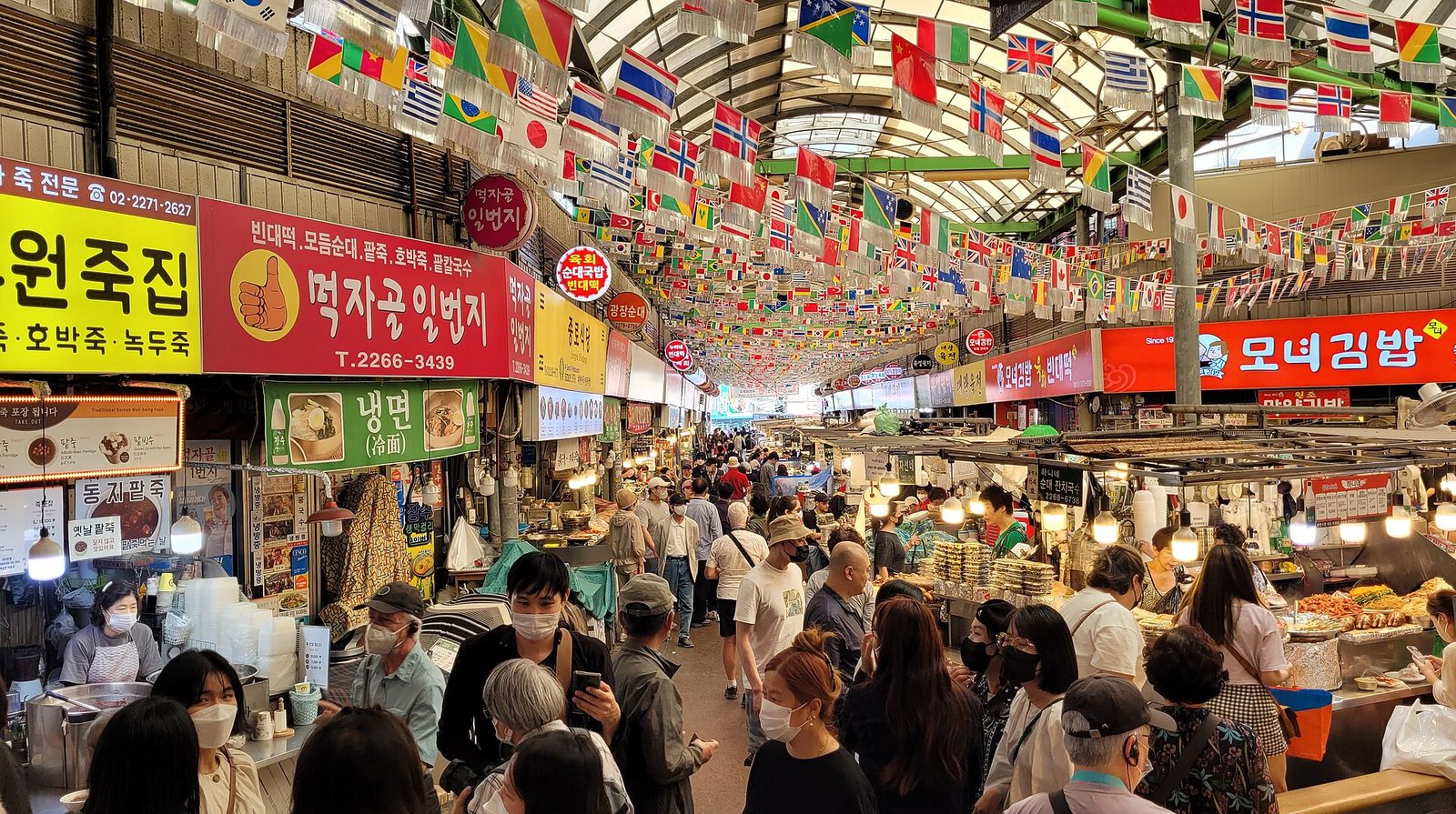
- Gwangjang Market (광장시장) in Jongno is Seoul's best-known food market, with long counters of stalls selling bindaetteok (mung bean pancakes), mini kimbap, mandu and noodles. It gets very busy in the evening and at weekends.
- Department store and mall food courts, usually on the basement floor, have picture menus, fixed prices and self-service ordering screens, often with an English option.
- Kimbap and gukbap chain shops are everywhere, cheap, and open long hours. Look for 김밥 or 국밥 on the sign. They are good for a quick bibimbap, kimbap, ramyeon or soup.
- Office districts at lunchtime such as Jongno, Gwanghwamun and Yeouido are full of small restaurants serving stews and set lunches to workers. If there is a queue of locals, it is usually a good sign.
Opening hours and closing days change often, and many small places close between lunch and dinner. Search the dish name in Hangul on Naver Map or KakaoMap to find places near you and check their current hours before you go.
Vegetarian and allergy notes
Many dishes that look vegetarian are not: kimchi usually contains fish sauce or salted shrimp, stews use anchovy or meat broth, and kimbap often has ham. Bibimbap without meat or egg, japchae made without beef, and vegetable mandu are the easiest choices, but always ask. Our vegetarian and vegan food guide has phrases and safer dishes, and if you have a serious allergy, carry a card written in Korean that names the ingredient.
How to order
In most restaurants you sit down, press the call button on the table (or say "저기요", jeogiyo, to get attention), point at the menu and pay at the counter on the way out. More places now use a tablet on the table or a kiosk at the door. Our guide to ordering Korean food walks through it step by step, with the phrases you need.
FAQ
What Korean food should I try first?
Start with something mild and familiar: bibimbap, bulgogi or kimbap. Then try Korean barbecue (samgyeopsal) and fried chicken with beer in the evening, and tteokbokki from a street stall once you are ready for some spice.
Is Korean food very spicy?
Some of it is, but many popular dishes are not spicy at all, including bulgogi, samgyetang, seolleongtang, japchae and jjajangmyeon. In bibimbap you add the chilli paste yourself, and you can ask for less spice by saying "deol maepge hae juseyo".
What is the most famous food in Seoul?
There is no single dish, but Korean barbecue, kimchi stew, bibimbap and the snacks at Gwangjang Market are what most visitors remember. Seolleongtang, a beef bone soup, is often called a Seoul speciality because it has been eaten in the city for centuries.