Gyeongju
The capital of the ancient Silla kingdom, often called a museum without walls: royal tombs, Bulguksa Temple and a lakeside palace site that glows at night. Compact and easy to explore by bike.
Planning a trip to Gyeongju
Getting there
The KTX goes from Seoul Station to Singyeongju Station in about two hours, and from there buses run to the old town centre. Gyeongju is also an easy day trip or overnight stop from Busan by train or intercity bus.
How long to stay
One full day covers the royal tombs, Cheomseongdae, Donggung Palace and Wolji Pond at night and Hwangnidan-gil. Stay a second day for Bulguksa temple and Seokguram grotto on the hillside east of town.
Getting around
The historic centre is flat and walkable, and renting a bicycle is popular. City buses reach Bulguksa and the station; taxis are handy for the hill to Seokguram.
When to go
Cherry blossoms around the tombs and Bomun Lake in early April and the autumn leaves in late October and November are the highlights. Summers are hot; winter is quiet and cold but clear.
Where to stay
Stay near Hwangnidan-gil or the tomb park to walk to the night views, in a hanok guesthouse for the atmosphere, or at Bomun Lake for larger resort hotels.
What to see first
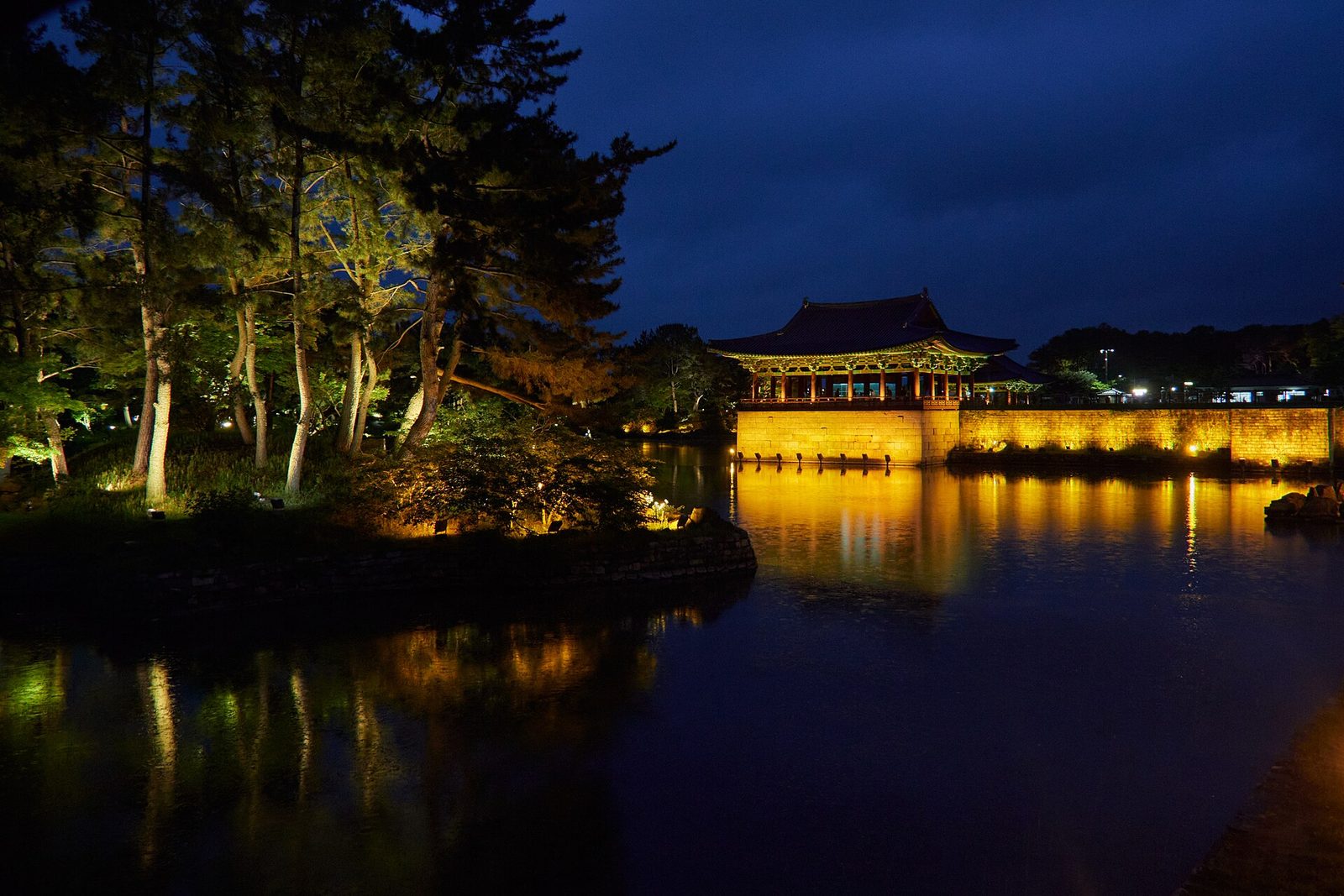
Gyeongju was the capital of the Silla kingdom for nearly a thousand years and is sometimes called a museum without walls. Walk among the grassy royal tombs of Daereungwon, see Cheomseongdae observatory, and visit Donggung Palace and Wolji Pond in the evening, when the pavilions are lit and reflected in the water. Bulguksa temple and Seokguram grotto, both UNESCO-listed, are on the hillside east of town.
What to eat
Gyeongju bread (Hwangnam-ppang), a small pastry filled with sweet red bean, is the famous souvenir snack. Ssambap restaurants near the tombs serve rice with a table full of side dishes and leaves for wrapping. Hwangnidan-gil has cafes and small restaurants in old hanok buildings.
Good to know
The main sights are close together in town, but Bulguksa and Seokguram are a bus or taxi ride away. Gyeongju National Museum is free and a good way to understand the Silla treasures before you see the sites. Hotels at Bomun Lake are quieter but further from the old town.
Places worth your time in Gyeongju
The Korean name is the one to show a taxi driver or paste into Naver Map or KakaoMap.
Bulguksa Temple 불국사
A UNESCO-listed temple from the Silla kingdom, known for its stone staircases and the two pagodas in the main courtyard, Dabotap and Seokgatap. Seokguram grotto is further up the mountain by shuttle bus or a forest path.
Daereungwon Tomb Complex 대릉원
A park of grassy royal burial mounds in the middle of town. You can walk inside one of them, Cheonmachong, to see how a Silla tomb was built.
Donggung Palace and Wolji Pond 동궁과 월지
The site of a Silla palace garden, best visited just after dark, when the rebuilt pavilions are lit and reflected in the pond.
Woljeonggyo Bridge 월정교
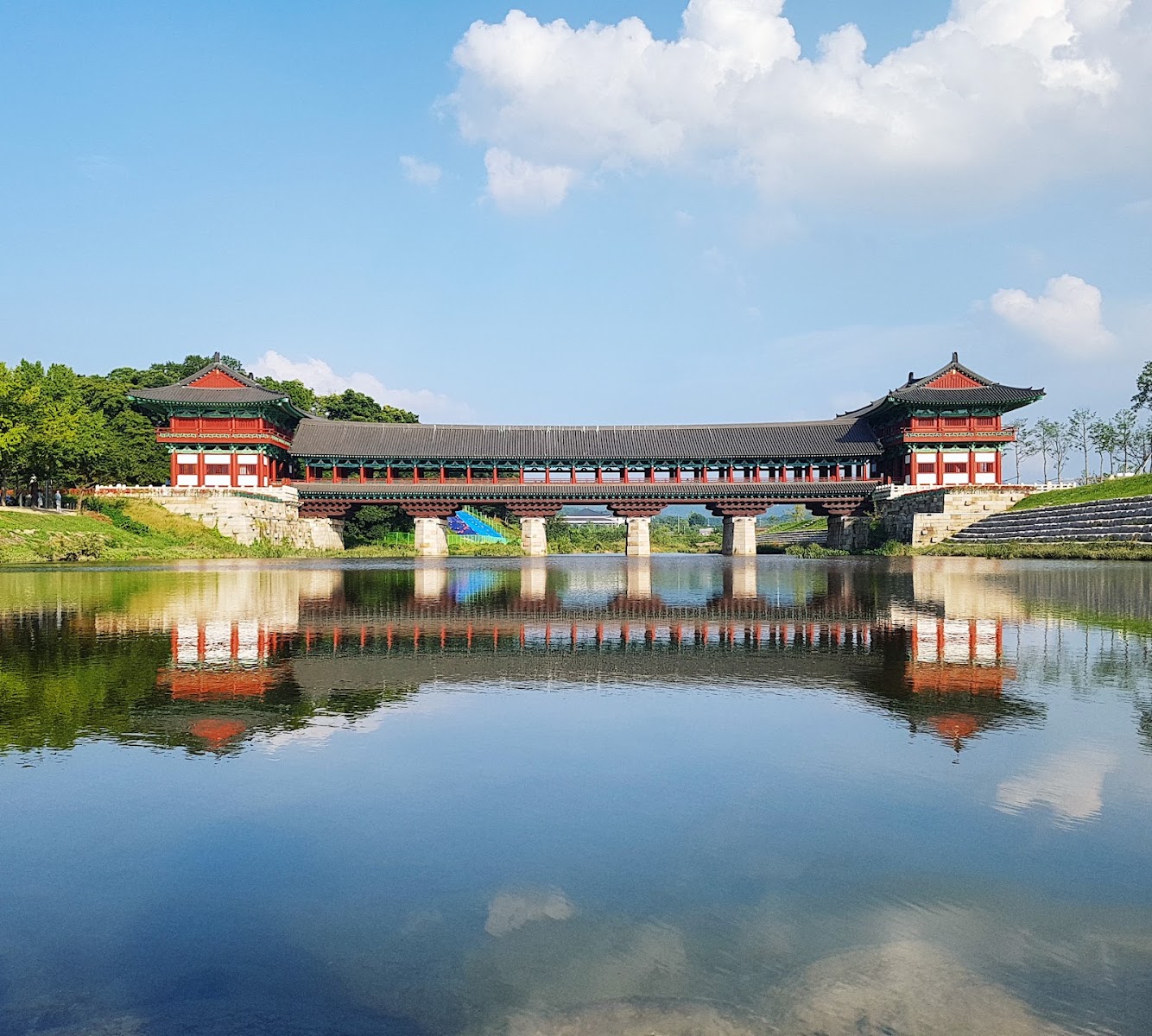
A grand covered wooden bridge, rebuilt on its Silla-era site beside the Gyochon hanok village. It is free to cross and beautifully lit at night.
Hwangnidan-gil 황리단길
The street beside the tomb park where old hanok houses have become cafés, restaurants and small shops. This is where to try Gyeongju bread and ten-won bread.