Three days is enough to get a real feel for Seoul without rushing: one day for palaces and old neighbourhoods, one for markets, shopping and a city view, and one you can shape around your own interests. This plan keeps each day in one part of the city, so you spend your time looking around rather than changing trains. Every stop links to a fuller guide where we have one.
Where to stay for this plan
Central Seoul works best: the area around Gwanghwamun, Jongno, City Hall or Myeongdong puts every stop below within a short subway ride or a walk. If you are coming straight from the airport, our Incheon Airport to Seoul guide compares the train, buses and taxis. For a comfortable base right by Gwanghwamun, see our guide to the Four Seasons Hotel Seoul.
Day 1: Palaces, hanok lanes and the stream
Morning: Gyeongbokgung Palace
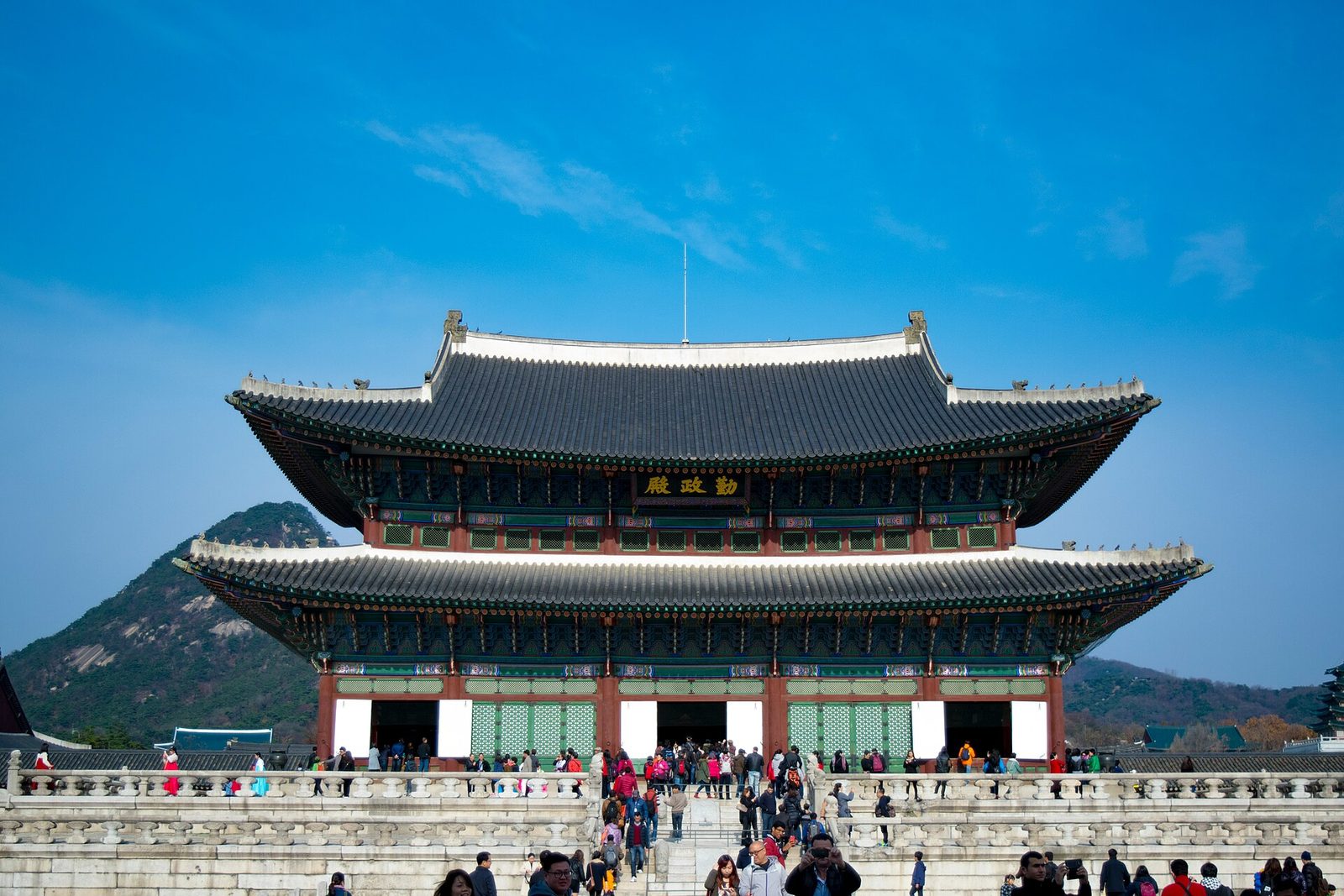
Start early at Gyeongbokgung Palace, the largest of Seoul's Joseon-era palaces (Gyeongbokgung Station, Line 3). Arriving near opening time means fewer crowds in the main courtyards. The changing of the royal guard at Gwanghwamun Gate usually takes place at 10:00 and 14:00. Visitors wearing hanbok get free entry to the palaces, and there are rental shops near the station if you want to try it.
Give the palace two hours or so. The National Folk Museum of Korea sits inside the grounds if you want more context.
Midday: Bukchon and Anguk
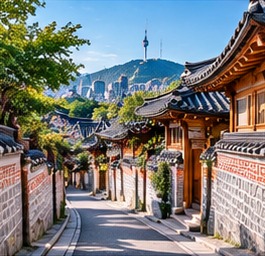
Walk east to the Anguk area and the hanok lanes of Bukchon. People live in these houses, so keep your voice down and stay out of private doorways; parts of Bukchon have visiting-hour limits for tourists, so check the signs. For a break, Cafe Onion Anguk serves coffee and pastries in a converted hanok a few minutes from Anguk Station.
Afternoon: Insadong
Insadong is a short walk south of Anguk. Its main street and side alleys are known for traditional crafts, tea houses and galleries, and it is a good place to look for small souvenirs such as hanji paper goods.
Evening: Cheonggyecheon
Finish with a walk along Cheonggyecheon, the stream that runs below street level from Cheonggye Plaza. It is lit after dark and an easy, free way to end the day. Our first evening in Seoul guide has more ideas if you have energy left.
Day 2: Markets, Myeongdong and Namsan
Morning: a traditional market
Gwangjang Market (Jongno 5-ga Station, Line 1) is one of Seoul's oldest markets and a good place for breakfast or an early lunch. Look for bindaetteok (mung bean pancakes) fried at the stalls and small rolls of mayak gimbap. Our street food guide explains what to order and how paying at a stall works.
Afternoon: Myeongdong
Take the subway to Myeongdong (Line 4) for cosmetics shops, fashion chains and, from late afternoon, street food stalls. Many shops offer tax refunds for visitors on qualifying purchases; bring your passport. If you want a sit-down meal nearby, Kampungku is a Malaysian restaurant close to the shopping streets.
Evening: N Seoul Tower
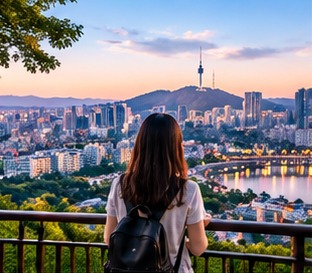
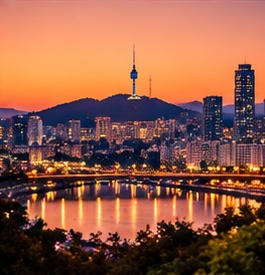
From Myeongdong you can walk up to the Namsan cable car, or take a bus up the mountain, to reach N Seoul Tower. The view over the city is best around sunset. Check the cable car and observatory times before you go, as they change with the season.
Day 3: Choose your own Seoul
Use the last day for the side of Seoul that suits you best. Each of these fills a half day, so pick two.
- More history: Changdeokgung Palace and its Secret Garden (Huwon). The garden can only be visited on a guided tour with its own ticket, and places are limited, so book ahead.
- Design and shopping: Dongdaemun Design Plaza and the late-opening fashion malls around Dongdaemun.
- Riverside: one of the Han River parks such as Yeouido, where locals picnic and cycle. Bike rental is easy and convenience stores are never far away.
- Something relaxing: a jjimjilbang, the Korean bathhouse; read our bathhouse guide first so you know the etiquette.
Not sure which part of the day suits each sight? Our guide to the best time to visit Seoul attractions helps you avoid the busiest hours.
Getting around between the stops
Almost everything in this plan is on the subway. Tap your transit card in and out at the gates, and keep it for buses too; transfers within a short window are discounted. Taxis are plentiful and fairly priced for short hops, and the Kakao T app lets you book one without speaking Korean. For walking directions, Naver Map or KakaoMap are more reliable than Google Maps in Korea.
Practical tips for three days in Seoul
- Most sights are busiest on weekends and public holidays. If you can, do the palaces on a weekday.
- Many restaurants have a break time in the mid-afternoon, roughly between lunch and dinner, so eat lunch before 14:00.
- Carry a little cash for markets, even though cards work almost everywhere else.
- Opening hours and closing days change. Check each place on a map app on the morning you go.
FAQ
Is three days enough for Seoul?
Three days covers the main palaces, a traditional market, a shopping district and a city view at a comfortable pace. If you have longer, add a day trip or spend more time in neighbourhoods like Seongsu, Hongdae or Itaewon.
Which day should I visit Gyeongbokgung?
Any day except Tuesday, when it is closed. Weekday mornings are the quietest. Changdeokgung is closed on Mondays.
Do I need to book anything in advance?
Most of this plan needs no booking. The exception is the Secret Garden tour at Changdeokgung, which has limited places. Popular restaurants may also have queues at peak times.