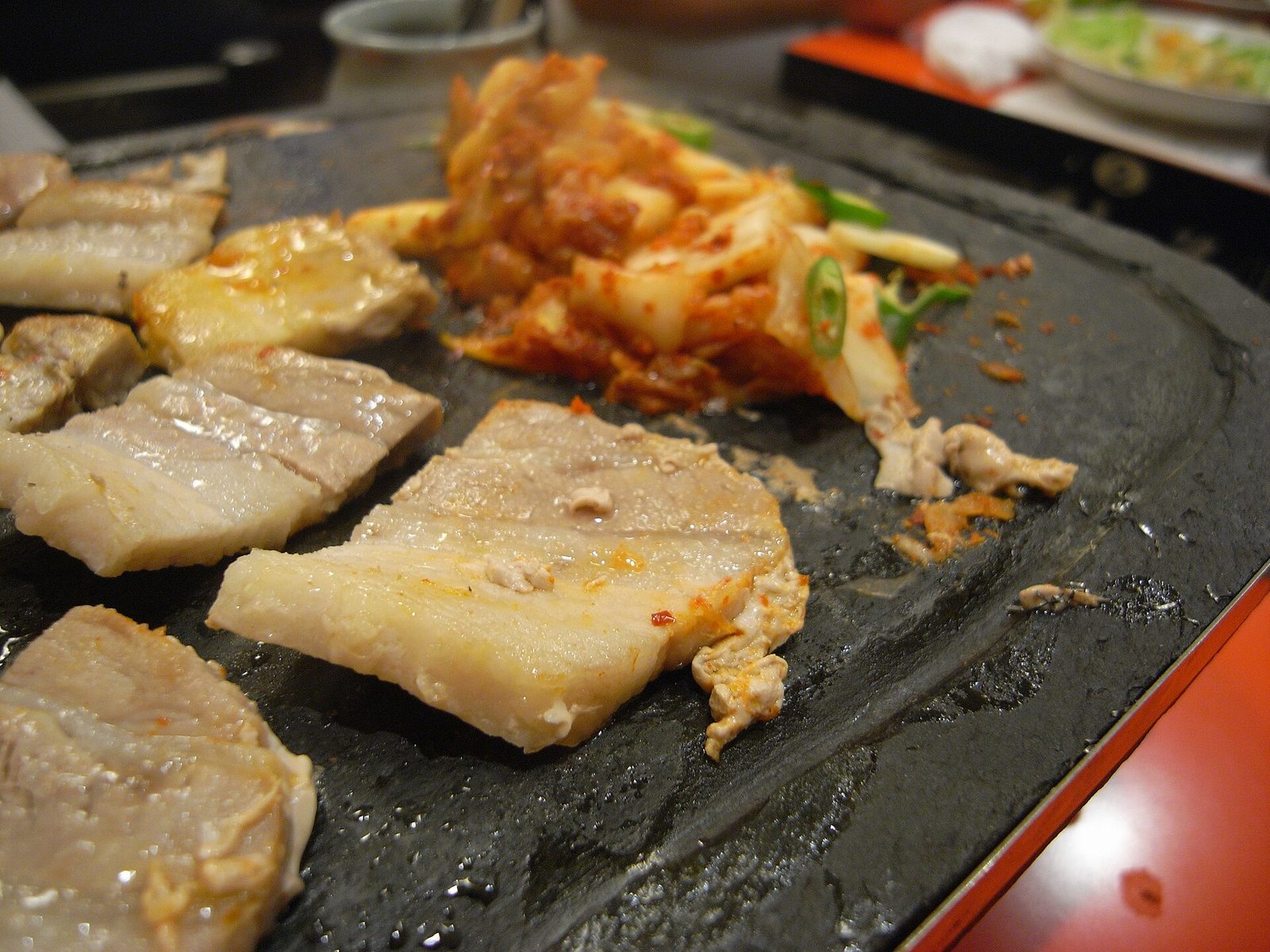
Korean BBQ is a meal you cook at the table, often sharing meat and side dishes with your group. The grill may be built into the table or brought in separately. Some restaurants cook for you; at others, you take charge. Customs and menus vary, but a few simple steps will help you feel at ease.
Come hungry, take your time, and treat the meal as something to enjoy together rather than a race to finish each plate.
1. Get seated and check how the grill works
Once you sit down, look for a grill in the middle of the table and a ventilation hood above it. If there is no hood, the restaurant may use a different setup. Staff may switch on the grill or adjust the heat for you. Before handling the grill, ask whether you should cook the meat yourself or wait for a staff member.
Many places provide tongs and kitchen scissors for cooking and cutting meat. If you are unsure which utensil to use, watch the staff or ask. The grill can get very hot, so keep your hands, sleeves, and loose items away from it.
2. Choose meat and other dishes
Menus often include beef, pork, chicken, or a mix. Popular choices include thinly sliced beef, marinated beef, and pork belly. The menu may list cuts in Korean, English, or both. If a description is unclear, point to the item and ask staff to explain it. You can also ask whether a portion is intended for sharing.
Some restaurants require each person to order a main item, while others let the table share. Check the menu or confirm before ordering. If you do not eat certain foods, say so clearly. Marinades and shared grills can make it difficult to avoid ingredients or contact with other foods, so ask about preparation before you order.
Side dishes, often called banchan, may come with the meal. These can include kimchi, pickled vegetables, or other small plates. Many restaurants also offer rice, soup, noodles, or stew. Order what you think your group will enjoy; you can always add more later if the restaurant allows it.
3. Let the grill heat up
Wait until the grill is ready before adding meat. If staff are helping, let them manage the first round and notice how they handle the food. If you are cooking, place the meat on the grill with tongs rather than your hands. Leave a little space between pieces so they cook instead of crowding together.
Do not put every piece on the grill at once. Cooking a smaller amount makes it easier to keep track of what is ready and prevents cooked meat from sitting too long. Marinated meat may brown or burn faster because of its seasoning, so keep an eye on it.
4. Cook, turn, and cut the meat
Turn the meat when the underside has browned or the edges begin to cook. Use the tongs provided, and cut larger pieces into bite-size portions with the scissors. Avoid cutting meat while holding it in your hand. If you are not sure when a piece is done, ask the staff rather than guessing. Chicken and pork should be cooked through.
Keep raw meat separate from ready-to-eat food. Use the tongs or other utensil that touched raw meat only for raw meat, unless it has been cleaned. Do not place cooked pieces on a plate that held raw meat. If the table has separate serving utensils, use them for the side dishes.
When a piece is ready, move it to the cooler edge of the grill or onto a clean plate, depending on the restaurant's setup. If the grill starts smoking heavily or food seems to be burning, ask staff to lower the heat or change the grill plate.
5. Make a lettuce wrap
A common way to eat Korean BBQ is to make a wrap, often called a ssam. Take a lettuce leaf or another leafy vegetable and place a piece of cooked meat in the center. Add a small amount of ssamjang, a savory dipping paste, and choose from the side dishes on the table. Raw garlic, chili, or other extras may be available, but you can skip anything you do not want.
Fold the leaf around the filling and eat the wrap in one or two bites. Keep it small enough to close comfortably. You do not need to add every topping, and there is no single correct combination. You can also eat the meat on its own, with rice, or dipped in a sauce.
6. Share food comfortably
People often share the meat and side dishes, but follow your group’s lead. Use serving tongs or chopsticks to take food from shared plates rather than using the utensil you have eaten with. If you are dining with others, wait until everyone has some food before taking the first pieces, unless your companions invite you to start.
It is fine to ask for help. Staff are used to guiding diners through the grill, and a simple question such as “Could you show me how to cook this?” is useful. If you do not speak Korean, pointing to the grill or menu item can help make your request clear.
7. Finish the meal at your own pace
When you have had enough meat, you can order rice, soup, stew, or noodles if you would like something more filling. Some diners enjoy these alongside the barbecue; others finish with them after the grilling is done. You do not have to order alcohol. If your group does, follow their lead, and feel free to choose a nonalcoholic drink instead.
Before leaving, check the table and your belongings. If you are concerned about the smell of smoke on your clothes, ask whether the restaurant has a place to store a coat or offers a cover for it. Not every restaurant has the same facilities.
Quick tips for your first visit
- Ask who is responsible for cooking before touching the grill.
- Cook a few pieces at a time, and use the provided tongs and scissors.
- Keep raw meat utensils away from cooked meat and side dishes.
- Try a lettuce wrap, but build it with toppings you actually enjoy.
- Ask staff for help with the menu, grill, or heat level.
Once you understand the basic rhythm, Korean BBQ is easy to enjoy: cook a little, share the sides, and eat at a relaxed pace.
Frequently Asked Questions
Should I grill the meat myself, or wait for the staff?
It depends on the restaurant: staff may cook the meat for you, or you may be expected to grill it yourself. If you’re unsure, ask before starting. When staff are helping, let them manage the cooking and follow their lead about when the meat is ready.
How do I make a Korean BBQ wrap?
Place a piece of cooked meat on a lettuce or perilla leaf, then add a little rice, sauce, or side dish if you like. Fold the leaf into a manageable bundle. A smaller wrap is easier to eat, and you can adjust the ingredients to suit your taste.
What if I have a food allergy or dietary restriction?
Tell the restaurant before ordering and ask about ingredients in the meat marinades, sauces, and side dishes. Some foods may be cooked on the same grill, so mention any serious allergy and ask whether cross-contact can be avoided. If you’re uncertain about a dish, it’s safer not to eat it.