Sokcho
A small east coast port town at the foot of Seoraksan National Park, with fresh seafood, a lively market and one of Korea's most loved mountain hikes.
Planning a trip to Sokcho
Getting there
Express buses from Seoul reach Sokcho in about two and a half to three hours. It is also an easy bus or taxi ride from Gangneung, an hour or so down the coast.
How long to stay
One or two days: a day for Seoraksan National Park and another for the seafront, Abai Village and the markets.
Getting around
Local buses run to Seoraksan's main entrance and along the coast; taxis are quick around town.
When to go
Mid to late October is the peak for autumn leaves in Seoraksan, and the park is very busy then. Summer brings beach crowds; winter is cold, quiet and good for sunrise views over the East Sea.
Where to stay
Stay by the beach or the port for the sea and the markets, or near Seoraksan's entrance if you want an early start on the trails.
What to see first
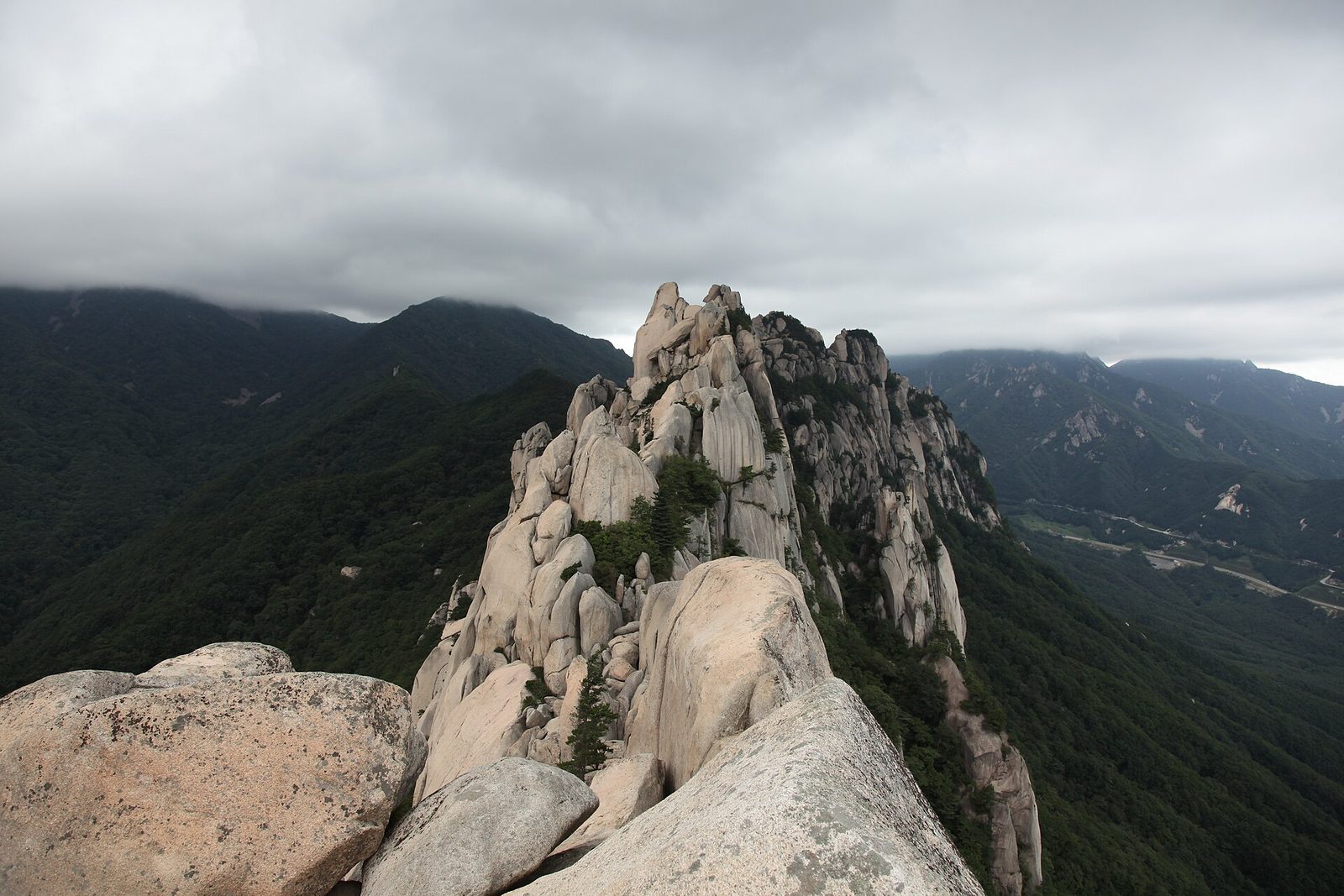
Seoraksan National Park is the main reason most people come: take the cable car toward Gwongeumseong fortress for a view with little effort, or hike to Ulsanbawi rock if you are fit. In town, a small hand-pulled ferry crosses to Abai Village, settled by refugees from the North during the Korean War. Naksansa temple stands on a cliff above the sea a short ride south.
What to eat
Sokcho Tourist and Fishery Market (Jungang Market) is the place for dakgangjeong, crispy sweet fried chicken sold in boxes, and for fresh seafood. Abai Village is known for squid sundae, squid stuffed with rice and vegetables, and for naengmyeon. Mulhoe, a cold spicy raw fish soup, is a summer favourite along the coast.
Good to know
Seoraksan's autumn colours peak in mid to late October, and the park is extremely busy then, especially at weekends; go on a weekday and start early. Some higher trails close during dry seasons for fire prevention. Sokcho also makes a good two-day trip combined with Gangneung by bus along the coast.
Places worth your time in Sokcho
The Korean name is the one to show a taxi driver or paste into Naver Map or KakaoMap.
Seoraksan National Park 설악산국립공원
The granite peaks behind the town. From the main Sogongwon entrance, a cable car goes up to Gwongeumseong for wide views with very little walking, and trails lead to Ulsanbawi rock and Biryong Falls.
Biseondae 비선대
A broad rock terrace beside a clear stream in Cheonbuldong Valley, reached by a mostly gentle walk of about an hour from the Sogongwon entrance. Despite the English name sometimes used, it is not a summit.
Yeonggeumjeong 영금정
A pavilion on the rocks at the edge of Dongmyeong Port, reached by a short bridge over the waves. It is one of the easiest sunrise spots on the east coast.
Sokcho Tourist and Fishery Market 속초관광수산시장
The central market, also called Jungang Market, where queues form for boxes of dakgangjeong (sweet crispy chicken), and for fresh and dried seafood.
Abai Village 아바이마을
A neighbourhood settled by refugees from the North during the Korean War. Cross on the gaetbae, a small ferry pulled by hand along a cable, and try squid sundae.
Naksansa Temple 낙산사
A temple on a sea cliff in Yangyang, about 20 minutes south of Sokcho. Walk out to the Hongryeonam hermitage above the waves and up to the tall statue of the Bodhisattva of Compassion.