You can get around Korea without speaking Korean, but two dozen polite phrases make every shop, restaurant and taxi ride smoother. Everything below uses the polite -yo form, which is right for staff, strangers and anyone older than you. The romanisation is a rough guide to the sound; say each syllable evenly and don't worry about perfect pronunciation, because people will understand you from context.
The 10 Korean words travelers use most
If you learn nothing else, learn these. Each one is explained in more detail further down.
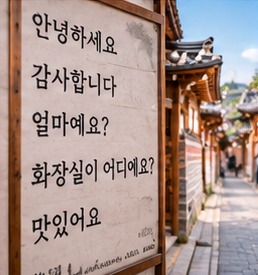
- 안녕하세요 (an-nyeong-ha-se-yo) — Hello.
- 감사합니다 (gam-sa-ham-ni-da) — Thank you.
- 네 / 아니요 (ne / a-ni-yo) — Yes / No.
- 이거 주세요 (i-geo ju-se-yo) — This one, please.
- 얼마예요? (eol-ma-ye-yo?) — How much is it?
- 화장실 어디예요? (hwa-jang-sil eo-di-ye-yo?) — Where is the toilet?
- 주세요 (ju-se-yo) — Please give me…, after any noun.
- 맛있어요 (ma-si-sseo-yo) — It's delicious.
- 계산해 주세요 (gye-san-hae ju-se-yo) — The bill, please.
- 죄송합니다 (joe-song-ham-ni-da) — I'm sorry.
Want to read the signs as well? Our learn Hangul page teaches the alphabet in a few short steps, and the one-page printable Korean cheat sheet fits in a pocket.
How to use these phrases
- Lead with a greeting. Starting with 안녕하세요 before a question makes people noticeably more willing to help.
- Noun + 주세요. 주세요 (ju-se-yo) means "please give me". Put it after almost any noun, or after 이거 (i-geo, "this one") while pointing, and you can order, shop and ask for things all day.
- Keep your phone ready. Show Korean names, addresses and screenshots rather than reading them aloud. A short phrase plus a screen beats a long sentence every time.
- A small bow helps. A slight nod of the head when you greet or thank someone reads as polite everywhere.
Greetings and thanks
- 안녕하세요 (an-nyeong-ha-se-yo) — Hello. Works at any time of day.
- 감사합니다 (gam-sa-ham-ni-da) — Thank you. The one phrase worth practising until it comes out naturally.
- 네 / 아니요 (ne / a-ni-yo) — Yes / No. You will also hear 네 used to mean "I see" or "OK".
- 죄송합니다 (joe-song-ham-ni-da) — I'm sorry. Use it when you bump into someone or make a mistake.
- 저기요 (jeo-gi-yo) — Excuse me, to get someone's attention, such as a server or a passer-by.
- 안녕히 계세요 (an-nyeong-hi gye-se-yo) — Goodbye, said when you leave and the other person stays, for example as you walk out of a shop.
Restaurants and cafes
- 두 명이요 (du myeong-i-yo) — Two people. Hold up fingers as you say it; swap in 한 명 (han myeong) for one or 세 명 (se myeong) for three.
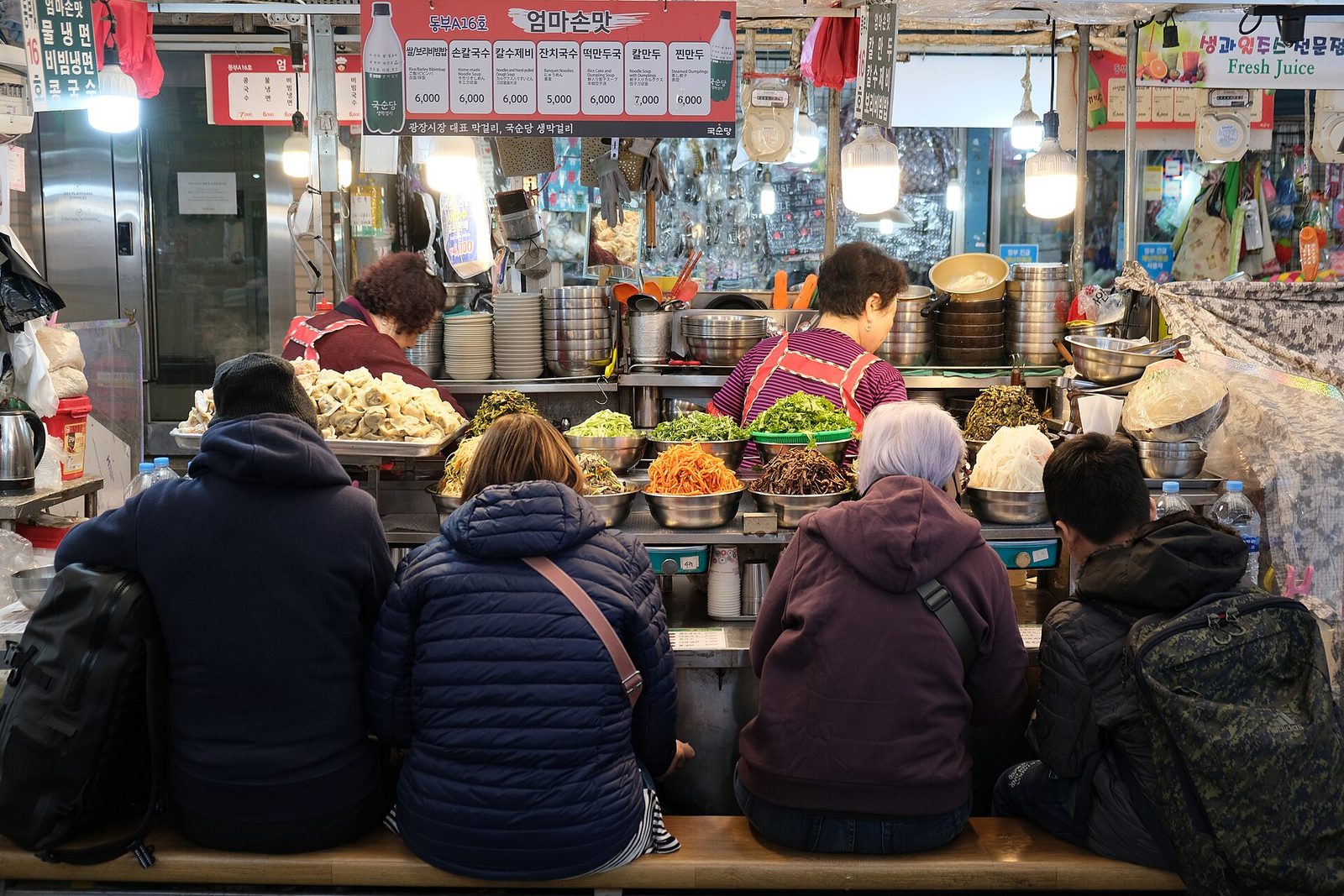
- 이거 주세요 (i-geo ju-se-yo) — This one, please. Point at the menu or the picture on the wall.
- 물 주세요 (mul ju-se-yo) — Water, please. Many places have a self-service water dispenser instead, so look around first.
- 안 맵게 해 주세요 (an maep-ge hae ju-se-yo) — Not spicy, please. Some dishes cannot be made mild, so treat this as a request rather than a promise.
- 포장해 주세요 (po-jang-hae ju-se-yo) — To take away, please.
- 계산할게요 (gye-san-hal-ge-yo) — I'd like to pay. In many restaurants you pay at the counter on the way out rather than at the table.
- 잘 먹었습니다 (jal meo-geot-seum-ni-da) — Thank you for the meal. Said to staff as you leave; it always earns a smile.
For menu words such as meat, rice and soup, see 10 Korean restaurant words, and for the ordering routine itself, how to order Korean food.
Shopping
- 얼마예요? (eol-ma-ye-yo) — How much is it? Prices are usually marked, so this is mostly useful at market stalls.
- 카드 돼요? (ka-deu dwae-yo) — Can I pay by card? The answer is almost always yes, but small market stalls may prefer cash.
- 봉투 주세요 (bong-tu ju-se-yo) — A bag, please. Shops often charge a small amount for bags, so carrying your own is common.
- 그냥 볼게요 (geu-nyang bol-ge-yo) — I'm just looking.
Getting around
- ___ 어디예요? (___ eo-di-ye-yo) — Where is ___? For example 화장실 (hwa-jang-sil), toilet, or 역 (yeok), station.
- 여기로 가 주세요 (yeo-gi-ro ga ju-se-yo) — Please take me here. Say it while showing the address on your phone to a taxi driver.
- 여기서 내려 주세요 (yeo-gi-seo nae-ryeo ju-se-yo) — Please let me off here. Useful in taxis when you spot your stop.
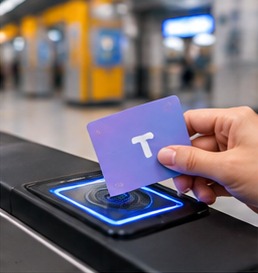
Saved places in Naver Map or KakaoMap show the Korean address you can hand over, and Kakao T lets you book a taxi without explaining the destination at all.
When you need help
- 도와주세요 (do-wa-ju-se-yo) — Please help me.
- 영어 하세요? (yeong-eo ha-se-yo) — Do you speak English? Younger people and staff in tourist areas often know some.
- 천천히 말해 주세요 (cheon-cheon-hi mal-hae ju-se-yo) — Please speak slowly.
- 몰라요 (mol-la-yo) — I don't know / I don't understand. Softer with a smile and an apologetic shrug.
- 알레르기 있어요 (al-le-reu-gi i-sseo-yo) — I have an allergy. Show the ingredient written in Korean on your phone as well.
In an emergency, dial 112 for the police and 119 for fire and ambulance. The 1330 Korea travel hotline runs around the clock and can help in English and several other languages, including interpreting a conversation for you over the phone.
FAQ
What Korean words should I learn before travelling?
Start with hello (안녕하세요), thank you (감사합니다), this one please (이거 주세요), how much (얼마예요?) and where is the toilet (화장실 어디예요?). Those five, plus pointing and a smile, cover most shops, cafes and restaurants.
Do I need to learn Hangul before visiting Korea?
No. Signs on the subway, at airports and at major sights are in English too. Learning to recognise a few characters is fun, but greetings and 주세요 will help you more on a short trip.
Which form of Korean should I use as a visitor?
Use the polite forms ending in -yo or -ni-da, as in this guide. Casual Korean is for close friends, and using it with staff or older people can sound rude.
Is a translation app enough on its own?
Apps are very good for menus and longer questions, but a spoken hello and thank you still matter. Use phrases for everyday moments and the app when you need detail, such as allergies or directions.