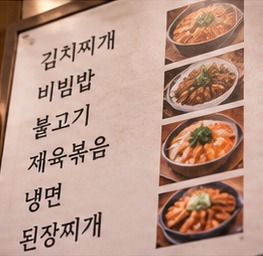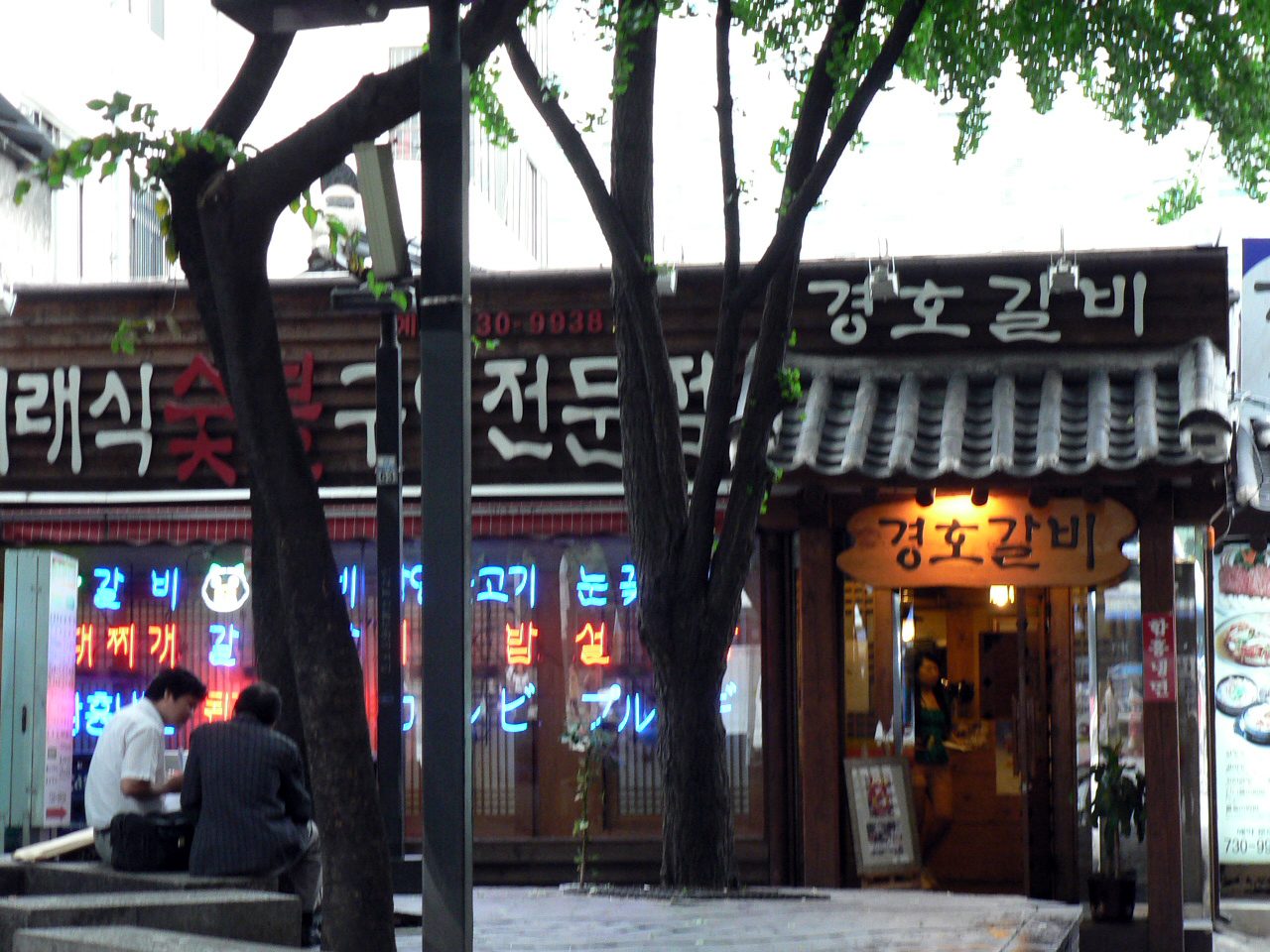
Hangul, the Korean alphabet, was designed in the 15th century to be easy to learn, and it really is: most people can sound out simple words after an hour of practice. You do not need to speak Korean for this to be useful. Being able to read 지하철 as "jihacheol" (subway), 출구 as "chulgu" (exit) or 김밥 as "gimbap" makes signs, menus and maps far less mysterious. Work through the letters below, then test yourself with the sign quiz and the memory game.
How Hangul works
Hangul has 14 basic consonants and 10 basic vowels, plus a few doubled and combined ones. Letters are not written in a line like English; they are grouped into square blocks, one block per syllable. Each block starts with a consonant, then a vowel, and sometimes ends with another consonant:
Put them together and you get 서울, Seoul. That is the whole system. Vertical vowels (like ㅏ, ㅓ, ㅣ) sit to the right of the first consonant; horizontal ones (like ㅗ, ㅜ, ㅡ) sit underneath it.
The consonants
Tap a letter to see an example syllable.
A few tips: ㅇ is silent at the start of a syllable (it just holds the place before a vowel) but sounds like "ng" at the end. ㄱ, ㄷ, ㅂ and ㅈ sound closer to k, t, p and ch at the start of a word, and closer to g, d, b and j between vowels, which is why you see both "g" and "k" in English spellings. ㄹ is between an "r" and an "l".
The doubled consonants are said with more tension, a bit like the "k" in "skate" compared with "kate":
The vowels
Notice the pattern: adding a second short stroke adds a "y" sound (ㅏ a, ㅑ ya; ㅗ o, ㅛ yo). ㅓ "eo" is like the "u" in "sun", and ㅡ "eu" is like the "oo" in "good" said with flat lips. ㅐ and ㅔ sound almost the same today.
Quiz: read the sign
Here are real words from Korean signs, maps and menus. Sound out the sign, then pick what it says.
0 / 0

Let's go!
Memory game
Turn over two cards at a time and match each Hangul card with its reading. Start with letters, then try travel words. Your best score is saved in this browser.
Let's go!
Practise on the trip
- Read station names on the subway map; they are written in Hangul and English side by side, so you can check yourself.
- Sound out menus. Many dish names are simple: 김치찌개 is "kimchi jjigae", kimchi stew. See how to read a Korean menu and restaurant words.
- Spot loanwords. Lots of signs are English written in Hangul: 커피 (keopi, coffee), 버스 (beoseu, bus), 호텔 (hotel). Once you can read them, you understand them.
- Learn a few phrases. See our useful Korean phrases.
Planning your trip? Our first-trip planner puts everything in order.
FAQ
How long does it take to learn Hangul?
Most people can learn the letters and sound out simple words in one to three hours. Reading quickly takes more practice, but even slow reading is useful on a trip.
Do I need to read Korean to travel in Korea?
No. Signs in cities and on transport are usually in English too. But reading Hangul helps with menus, small shops and map apps, and locals appreciate the effort.
Why are there two spellings, like "gimbap" and "kimbap"?
Some Korean sounds sit between two English letters, so older and newer romanisation systems spell them differently. Korea's official system today uses "gimbap", but you will see both.