In Korea, the year does not really start at midnight. It starts at dawn on 1 January, when hundreds of thousands of people stand on beaches, cliffs and hilltops to watch the first sunrise of the year, called haedoji (해돋이) or haemaji (해맞이). People make a wish for the year as the sun comes up. It is cold, crowded and early, and it is one of the most memorable things you can do on a winter trip. Here is where to go and how to make it work.
When the sun comes up
On 1 January the sun rises at about half past seven on the south-east coast, a few minutes later along the Gangwon coast, and at about a quarter to eight in Seoul. In recent years the Korea Astronomy and Space Science Institute gave these approximate times:
- Ganjeolgot (Ulsan) and Homigot (Pohang): about 7:31 to 7:32, the earliest on the mainland
- Haeundae (Busan): about 7:32
- Seongsan Ilchulbong (Jeju): about 7:36
- Jeongdongjin and Gyeongpo (Gangneung): about 7:39 to 7:40
- Sokcho: about 7:42
- Seoul: about 7:45, a little earlier from a hilltop
The times barely change from year to year, but the sky starts glowing well before the sun appears, so aim to be in place 30 to 45 minutes early. Cloud on the horizon can hide the moment itself; locals say a sunrise behind the clouds still counts.
The best places to watch
Jeongdongjin and Gyeongpo, Gangneung
Jeongdongjin is the classic choice: a small station right on the beach, so you can arrive by train and walk straight onto the sand. Gyeongpo Beach, a short taxi ride away, is bigger and has more space. Gangneung is about two hours from Seoul by KTX; see our Gangneung guide and KTX guide.
Homigot, Pohang
Famous for the giant bronze hand rising out of the sea, with the sun coming up beside it. It is one of the earliest sunrises on the mainland and one of the busiest, so expect long traffic queues on the only road in.
Ganjeolgot, Ulsan
A headland with a lighthouse that competes with Homigot for the title of first sunrise on the mainland. Easier to reach from Busan than from Seoul.
Haeundae, Busan
The easiest big-city option: the sun rises over the sea right off the beach, and you can walk back to a warm café or your hotel afterwards. Busan is also the mildest of the big sunrise spots. See our Busan guide.
Seongsan Ilchulbong, Jeju
Its name means "sunrise peak". Climbing the crater rim for the first sunrise is a Jeju tradition, so access on New Year's morning is busy and may be controlled. The beach and fields below have good views too. See our Jeju guide.
Sokcho and Naksansa
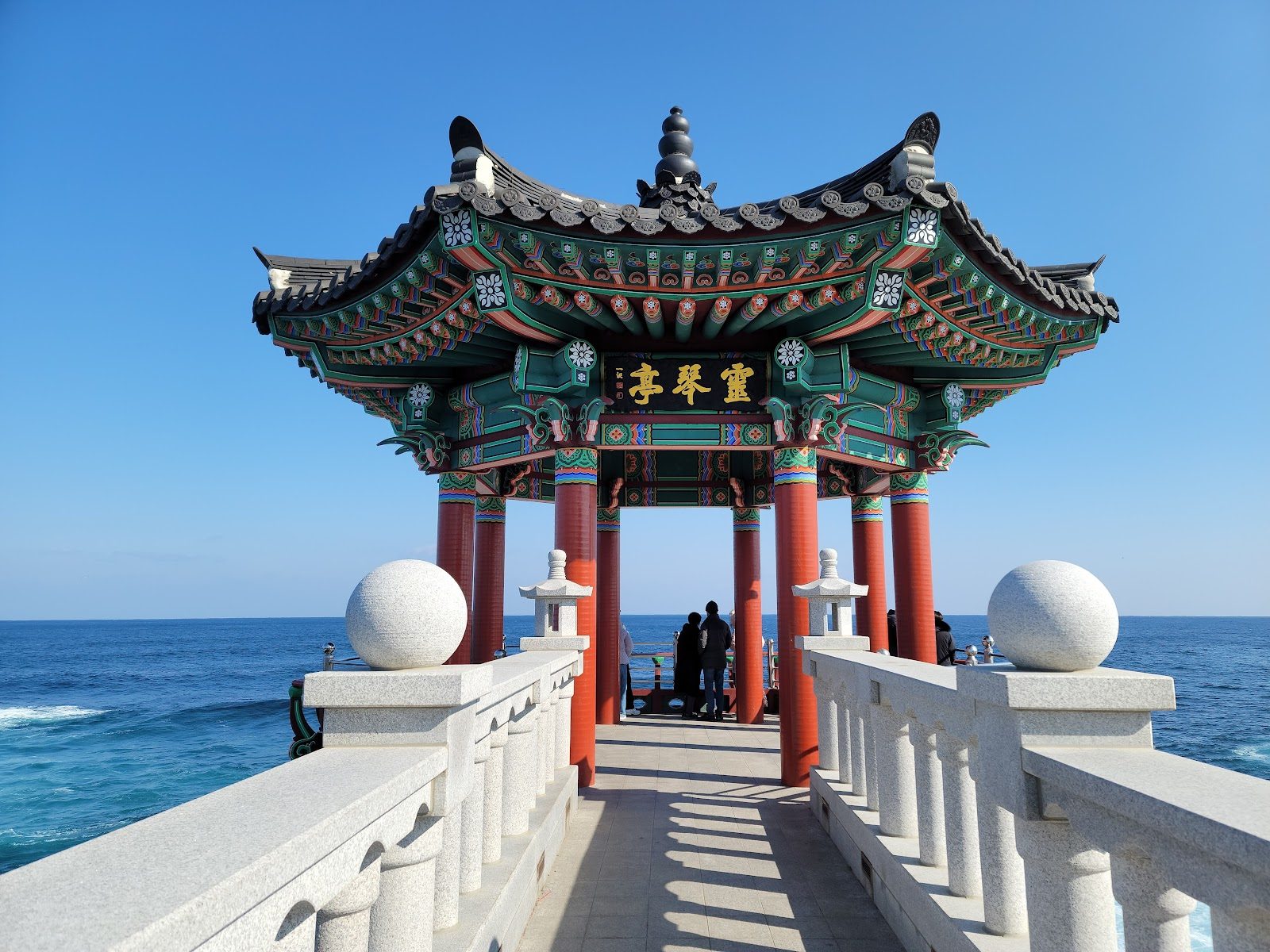
Further north, Sokcho's beaches and the clifftop pavilion at Naksansa temple face straight out over the East Sea. Our Yeonggeumjeong sunrise pavilion guide covers a quieter spot in the town.
In Seoul
You do not have to leave the city. Popular hilltops include Achasan in the east, Eungbongsan above the Han River, Inwangsan and Namsan. They are short climbs, but steep and icy in places, so wear good shoes and bring a torch. Districts often hold small sunrise events with free hot drinks; check the Seoul city and district websites in late December.
Getting there
- Book early. Trains to the east coast on 31 December and 1 January, and hotels near the beaches, sell out weeks ahead. Korail also runs special sunrise trains in some years; look for them on the Korail website from early December.
- Driving is slow. Roads into the famous spots are jammed before dawn and after sunrise. Many people park far away and walk, or take a taxi part of the way.
- Stay nearby. The calmest way is to stay the night of 31 December near the beach and walk out in the morning.
- Combine it with New Year's Eve. Some people watch the Bosingak bell in Seoul at midnight and then head east overnight. See our Christmas and New Year in Seoul guide.
Staying warm and comfortable
You will stand still outside for an hour or more at the coldest time of the day, often with a sea wind. Wear your warmest coat, a hat, gloves and thermal layers, and bring hand warmers from a convenience store. A flask of something hot helps. Toilets near the big spots have long queues, so go before you set off. Our winter travel guide has more tips.
After the sun is up, do as the locals do and eat tteokguk, a rice cake soup traditionally eaten on New Year's Day. Many restaurants near the beaches serve it from early morning.
Is it worth it?
If you are in Korea over New Year, yes. Even if the sunrise itself is hidden by cloud, the atmosphere of thousands of people cheering at dawn is something you will not forget. If you would rather avoid the crowds, any of these places is just as beautiful on 2 January, or on any clear winter morning. For the rest of the month, see our Korea in January guide.
FAQ
What time is sunrise in Korea on 1 January?
About 7:30 on the south-east coast, around 7:40 on the Gangwon coast and Jeju, and about 7:45 in Seoul. Arrive 30 to 45 minutes earlier.
Where is the first sunrise in mainland Korea?
Ganjeolgot in Ulsan and Homigot in Pohang usually see it first, a minute or so apart.
Can I watch the New Year sunrise in Seoul?
Yes. Hilltops such as Achasan, Eungbongsan, Inwangsan and Namsan are popular, and some districts hold small events with hot drinks.