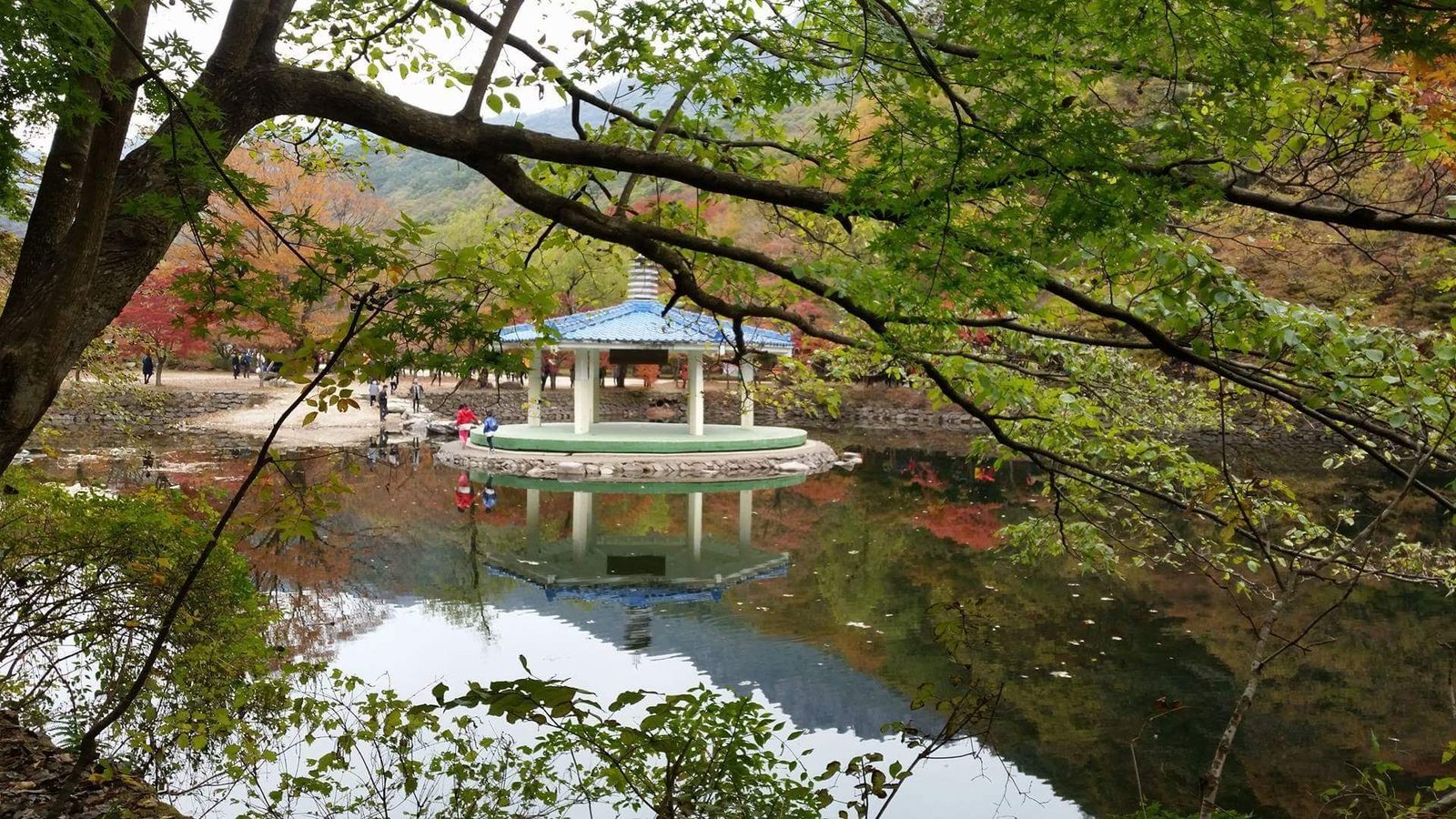
Autumn is many people's favourite season in Korea. The air turns crisp and dry, the sky is often a clear, deep blue, and from early October the mountains change colour from north to south: maples turn red, ginkgo trees turn bright yellow, and silver grass fills the hills. This guide covers when the colours are expected to peak in 2026, where to see them in and around Seoul and further afield, and how to beat the crowds.
When is autumn foliage in Korea in 2026?
The leaves change first in the high mountains of Gangwon Province in the north-east and then move south and down to lower ground at around 20 to 25 km a day. According to the Korea Forest Service's 2026 forecast, the colours peak nationwide in late October, a little later than average because of a warm autumn:
- Seoraksan (Gangwon): peak around 20 October
- Songnisan (central Korea): around 28 October
- Naejangsan (Jeollabuk-do): around 4 November
- Hallasan (Jeju): around 6 November
The private forecaster Kweather expects mountains in central Korea to peak between about 19 October and 1 November, and those in the south between about 1 and 11 November. In Seoul itself, parks, palaces and tree-lined streets are usually at their best from late October into mid-November, with the ginkgo trees often last to turn.
Forecasts are estimates and the weather can shift them by several days. If your dates are fixed, focus on the places that will be at their best during your trip rather than chasing one particular mountain.
Where to see autumn colours in Seoul
You don't need to leave the city. These are easy to reach by subway:
- The palaces. Gyeongbokgung and Changdeokgung are beautiful in autumn. Changdeokgung's Secret Garden (Huwon), one of the best autumn spots in the city, can only be visited on a guided tour with limited places, so book ahead. Gyeongbokgung is closed on Tuesdays and Changdeokgung on Mondays.
- Deoksugung Stone Wall Road. A short walk from City Hall, lined with yellow ginkgo trees in early November.
- Namsan. The walking paths up to N Seoul Tower pass maples and ginkgo, with views over a city full of colour.
- Haneul Park. A hilltop park in western Seoul known for its silver grass in October, best in the late afternoon light.
- Seoul Forest and Olympic Park. Large, open parks for a relaxed autumn walk or picnic.
- Bukhansan. The national park on Seoul's northern edge is the city's most popular autumn hike. Trails are rocky in places, so wear proper shoes.
Day trips from Seoul
- Nami Island and Gapyeong. Tree-lined avenues of ginkgo and metasequoia on a river island, about 1.5 hours from Seoul. Combine it with the Garden of Morning Calm nearby.
- Hwadam Forest (Gwangju, Gyeonggi-do). A landscaped forest garden famous for its maples. Entry is by advance reservation in the autumn season.
- Seoraksan National Park. The classic autumn mountain, about 2.5 to 3 hours from Seoul by bus. Go early in the season because it peaks first, and expect very busy trails and cable car queues at weekends.
See our day trips from Seoul guide for getting there.
Further south: the late-season spots
- Naejangsan is often called the best autumn mountain in Korea for its red maples around Naejangsa temple. It is extremely crowded at peak weekends; go on a weekday and start early.
- Gyeongju pairs autumn colours with history. Bulguksa Temple, the old tombs of Daereungwon and the ginkgo-lined road near Tongiljeon are lovely in early November. See our one day in Gyeongju itinerary.
- Jeonju Hanok Village and the nearby countryside are good from late October into November. See our Jeonju Hanok Village guide.
- Jeju turns last. Hallasan's slopes and the silver grass on Jeju's oreum (volcanic hills) are at their best in late October and November.
Tips for seeing the colours without the crowds
- Go on a weekday. Autumn weekends are the busiest days of the year at popular mountains, and roads out of Seoul get congested.
- Start early. Arrive at popular spots by 9 a.m. for quieter paths and softer light.
- Book what can be booked. The Secret Garden tour, Hwadam Forest and buses or trains on peak weekends can sell out.
- Dress in layers. Days can be warm, but mornings and evenings are cool, and mountain tops are much colder. See our guide to Korea's seasons and what to pack.
- Check the day's conditions. Use Naver Map for routes and the national park's notices for trail closures, which are common in autumn because of wildfire risk.
FAQ
When is the best time to see autumn leaves in Seoul?
Usually from late October to mid-November. In 2026 the nationwide peak is forecast for late October, with Seoul's ginkgo trees often turning in early November.
Where is the best autumn foliage near Seoul?
Within the city, try the palaces, Deoksugung Stone Wall Road, Namsan and Bukhansan. For a day trip, Nami Island and Hwadam Forest are popular, and Seoraksan is the classic mountain.
Is autumn a good time to visit Korea?
Yes. It is one of the most pleasant seasons, with mild temperatures, low humidity and beautiful scenery. Popular places are busy, so book key things ahead.