January is the heart of Korean winter: the coldest month of the year, with dry, bright days, the best chance of snow and a run of winter festivals on frozen rivers. It is also low season for most sights, so palaces and museums are quieter than at any other time. If you dress for it, January can be one of the most memorable months to visit.
What the weather is like
In Seoul, daytime temperatures in January are often below freezing, and nights regularly drop to minus ten degrees Celsius or lower during cold spells. Winds from the north make it feel colder still. Days are usually dry and sunny, with snow on some days. Busan and the south coast are milder and rarely snowy. Gangwon Province, in the north-east, is the coldest and snowiest part of the country, which is why the ski resorts and ice festivals are there.
Korean weather forecasts often mention a pattern of "three cold days, four warm days": a few bitter days, then a few milder ones. Plan outdoor days for the milder spells if you can.
What to pack
- A long padded coat rated for real cold, with a hood.
- Thermal layers for your top and legs, especially for festivals, skiing or a day trip to the mountains.
- Warm, waterproof shoes with good grip. Pavements and steps can be icy, and ice festivals are held on frozen rivers.
- Hat, gloves, scarf and a neck warmer.
- Heat packs, sold cheaply at every convenience store. Stick one inside a pocket or a boot.
Our winter travel guide covers staying warm in more detail.
Things to do in January
Ice fishing festivals
January is ice festival season in Gangwon Province. The best known is the Hwacheon Sancheoneo Ice Festival, where visitors fish for trout through holes in a frozen river, then have them grilled on the spot. There are also ice slides, sledging and ice sculptures. These festivals depend on the ice being thick enough, so dates can change in a mild winter. Our winter festivals guide covers the main ones and how to get there.
Skiing and snowboarding
January has the best snow conditions and every slope open. Weekends and the school holidays are busy, so ski on a weekday if you can. See our ski resorts guide.
Palaces in the snow
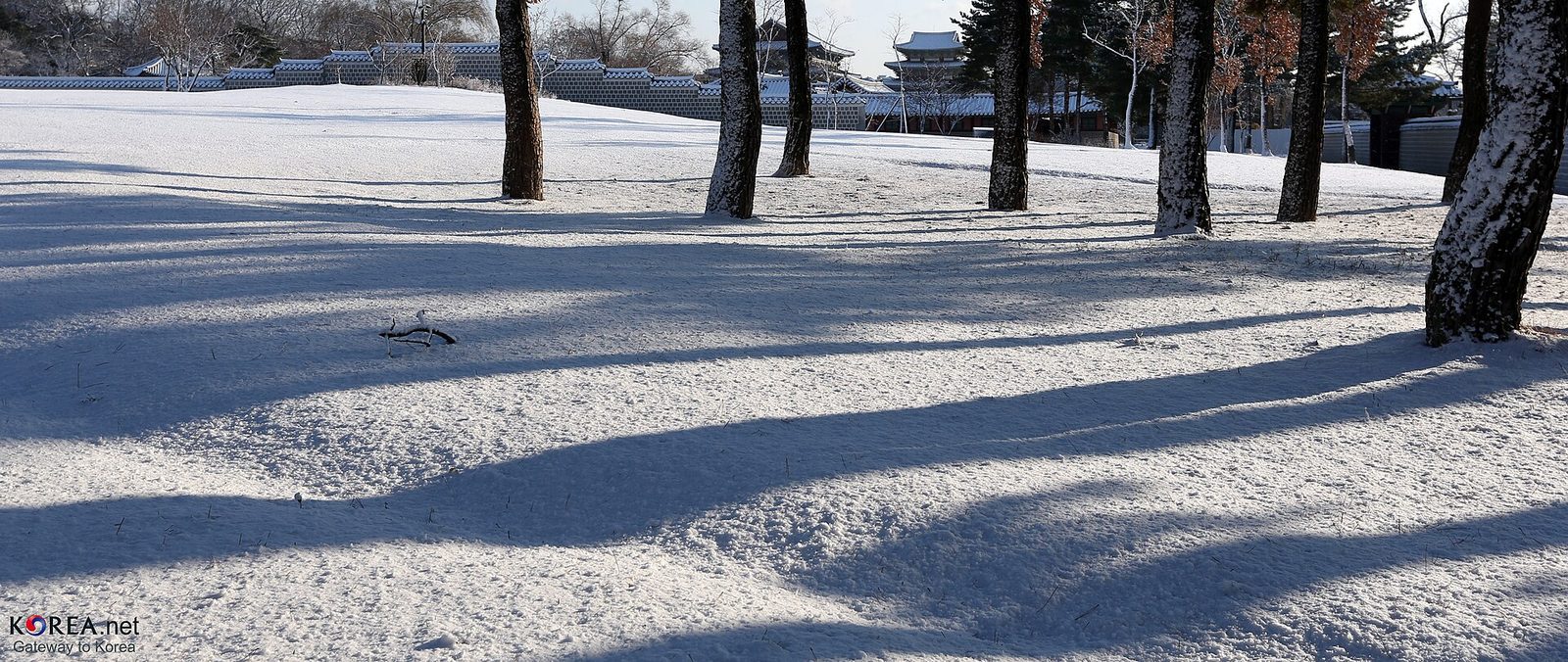
After a snowfall, Seoul's palaces are at their most beautiful, with white roofs against red pillars. Go early in the morning, before the snow is trodden down. Gyeongbokgung and Changdeokgung are the most photogenic. Palaces are closed one day a week, so check before you go.
Warm indoor days
On the coldest days, plan time indoors: museums, underground shopping malls, covered markets, a long lunch of stew or Korean barbecue, and an evening in a Korean bathhouse. See our bathhouse guide and Korean BBQ guide.
New Year's Day sunrise
1 January is a public holiday. Many Koreans travel to the east coast or climb a hill to see the first sunrise of the year. If you want to join them, book transport and rooms well ahead. Our Christmas and New Year guide has more.
Things to watch out for
- Ice: steps, hills and shaded streets can be slippery for days after snow.
- Short days: it gets dark around half past five, so start sightseeing early.
- Lunar New Year: in some years it falls in late January. In 2027 it falls in early February (6 to 9 February), so January 2027 is clear. See our Seollal guide.
- Fine dust: on some mild, still winter days the air quality drops. Check an air quality app and wear a mask if needed.
Is January a good time to visit?
Yes, if you want snow, skiing and winter festivals, and you do not mind real cold. It is one of the cheapest and quietest months for flights and hotels, apart from the New Year holiday. If the cold puts you off, consider early December or late February instead; see our December guide and February guide.
FAQ
How cold is Korea in January?
Very cold. In Seoul, days are often below freezing and cold spells bring nights of minus ten degrees Celsius or lower. The south coast and Jeju are milder.
Does it snow in Seoul in January?
Often, though usually not heavily. For deep snow, head to Gangwon Province in the north-east.
Is January a good time for the ice fishing festivals?
Yes, most of them run in January when the rivers are frozen. Dates depend on the ice, so check the festival website before you go.