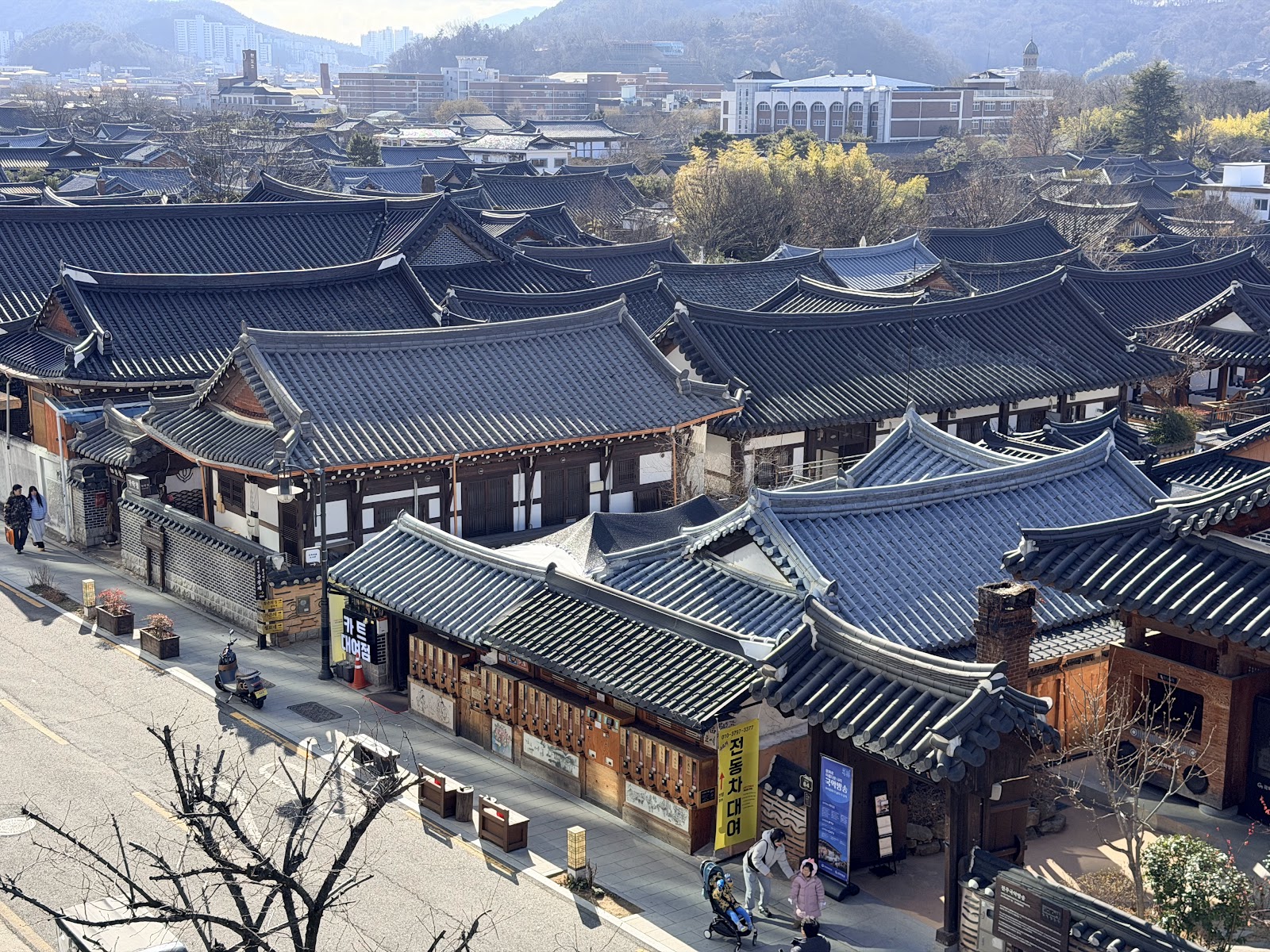
Jeonju Hanok Village: A Thoughtful Guide to Korea’s Traditional Heart
At a glance: Jeonju Hanok Village is a historic neighborhood of traditional Korean houses, narrow lanes, cultural sights and places to eat. It is best explored on foot, with time to look beyond the busiest streets.
- Address: 99 Girin-daero, Wansan-gu, Jeonju, Jeonbuk State
- Google rating: 4.1/5 from 29,275 reviews, according to the current listing
- Best for: Architecture, local culture, walking and food
What makes the village worth visiting
Jeonju Hanok Village offers a chance to experience traditional Korean architecture within a modern city. Its lanes are lined with hanok, the Korean term for traditional houses, recognizable by features such as tiled roofs, wooden frames and enclosed courtyards. The neighborhood is not a museum set apart from everyday life: homes, businesses and visitor attractions share the same streets.
That mix is part of the appeal. One moment you may be walking past a quiet residential wall; the next, you may reach a busy stretch of cafés, craft shops or food stalls. The experience changes from lane to lane, so it is worth wandering beyond the main pedestrian flows rather than treating the village as a single photo stop.
Jeonju is also strongly associated with Korean food. The village is a convenient place to sample regional and familiar dishes, including bibimbap, as well as snacks sold by local businesses. Menus and offerings vary, so take a look at what is available on the day and consider stepping away from the busiest section if you want a quieter meal.
What to see and do
Start with the architecture. Look at how the rooflines, timber details and small courtyards shape the streetscape, and notice how newer businesses adapt traditional buildings for contemporary use. The lanes are more rewarding when explored at an unhurried pace: turn down side streets, pause in a courtyard open to visitors, and take in the changing views between rooftops.
Gyeonggijeon Shrine is one of the village’s notable cultural landmarks and makes a natural addition to a walk. The historic shrine grounds offer a different atmosphere from the shopping streets. Omokdae, a traditional pavilion on higher ground, is another place visitors seek out for views over the rooftops. Jeondong Cathedral, near the village area, provides a striking contrast in architectural style. Check on-site information before planning around a particular building or attraction, as access and visitor arrangements may vary.
Many visitors also choose to wear hanbok, traditional Korean clothing, for photographs and a more immersive stroll. If you are interested, compare rental options in person and confirm the terms directly with the provider. There is no need to dress up to enjoy the village; comfortable clothes and shoes are perfectly suitable.
How to plan your visit
Give yourself enough time to walk without rushing. A half-day is a useful starting point if you want to see the lanes, stop for food and visit one or two cultural sights; a shorter visit can still give you a sense of the neighborhood. Your pace will depend on how long you spend browsing, eating and taking photographs.
The village is popular, and the main streets can feel busy, particularly at peak visitor times. If you prefer a quieter experience, consider beginning earlier in the day or exploring side lanes as well as the central routes. Keep in mind that some streets are residential. Be considerate around homes, avoid blocking entrances, and ask before photographing people or private spaces.
Because the village is best experienced on foot, wear shoes that are comfortable for extended walking. Be prepared for different surfaces and occasional slopes around the area. If you have limited mobility or are visiting with a stroller, check the conditions of your intended route as you go rather than assuming every lane is equally easy to navigate.
Good to know
- Use the address for navigation: Search for “Jeonju Hanok Village” or use the listed address, 99 Girin-daero, Wansan-gu, Jeonju.
- Plan flexibly: The neighborhood combines streets, businesses and cultural attractions, so allow room to change your route as you explore.
- Be respectful: This is also a place where people live. Keep noise down in residential lanes and follow signs at cultural sites.
- Check details locally: Opening arrangements, access and business offerings can change. Confirm current information with the individual attraction or business before making a specific plan.
- Read ratings in context: The Google listing currently shows 4.1/5 from 29,275 reviews. That score reflects a large range of visitor experiences; it is not a substitute for checking what matters to you, such as crowd levels or accessibility.
Useful links
- Jeonju Hanok Village on Google Maps
- No official website is listed for this place.
FAQ
How much time should I spend at Jeonju Hanok Village?
A half-day is a comfortable starting point for walking the lanes, having a meal and visiting a cultural sight. You can also make a shorter visit if you focus on a smaller area.
Is Jeonju Hanok Village only a historic attraction?
No. Alongside traditional architecture and cultural landmarks, the neighborhood includes homes, shops, cafés and food businesses. It is a living urban district as well as a visitor destination.
Do I need to wear hanbok to visit?
No. Hanbok is an optional way to enjoy the visit and take photographs. Everyday comfortable clothing is fine.