Seoraksan National Park is a good place to see Korea’s mountain scenery, but its trails range from gentle valley walks to steep, all-day climbs. For a first visit, choose a route by the time you have and how comfortable you are on stairs and uneven stone paths. The most convenient starting point for the park’s popular eastern trails is Seorak-dong, east of central Sokcho.
Getting to the trails
From Seoul, take an intercity or express bus to Sokcho. There is no subway in Sokcho. From Sokcho Express Bus Terminal, city buses commonly listed as 7 and 7-1 run toward Seorak-dong and the park entrance. Use Naver Map or KakaoMap for local directions; check current bus routes and trail notices on the Korea National Park Service website before setting out.
At the entrance, look for signs for 소공원 (Sogongwon), the main trail hub for Biseondae, Biryong Falls and Ulsanbawi. Bring water and a snack from Sokcho, since choices are more limited once you are on the trail. The Korean word 입산통제 means hiking access is restricted; closures can happen because of weather or trail conditions.
Easy: Biseondae Valley
Best for: a first mountain walk, families with older children, or visitors who want dramatic scenery without a summit climb.
From Sogongwon, follow the valley path toward Biseondae Rock. It is roughly 3 kilometres each way, with a broad, well-used route alongside streams and cliffs. The walk is not completely flat: expect stretches of stone paving and steps, but you do not need to tackle a long, exposed climb. Allow about two to three hours for the return walk, including photo stops.
Biseondae is a striking rock formation beside the water, and a natural place to turn around. The trail continues toward Geumganggul Cave, but that section gets much steeper. If you are new to hiking or wearing casual shoes, enjoy the valley and finish at Biseondae rather than treating the cave as an automatic add-on.
Local tip: Start earlier in the day if you want a quieter walk and softer light on the rock walls. Afterward, take a bus back toward Sokcho and try makguksu, chilled buckwheat noodles often served with a tangy dressing. At Sokcho Jungang Market, look for ojingeo sundae, a local-style squid stuffed with filling.
Easy to moderate: Biryong Falls
Best for: visitors who want a waterfall destination and are happy to climb some stairs.
The route to Biryong Falls also starts near Sogongwon. It passes Yukdam Falls and follows a forested valley, with bridges and stair sections along the way. Plan on around 5 kilometres round trip and roughly two to three hours, depending on your pace and stops. The distance is manageable for many beginners, but the steps make it more tiring than a flat stroll. Wear shoes with a firm grip, especially after rain.
Follow signs for 비룡폭포 (Biryong Falls) and turn back at the signed destination unless you have checked the route beyond it. Do not climb onto wet rocks for a photograph; the water and stone can be slippery. This is a satisfying choice when you have half a day but do not want the long staircase of Ulsanbawi.
Moderate to strenuous: Ulsanbawi Rock
Best for: fit walkers who want a famous viewpoint and are comfortable with a steep finish.
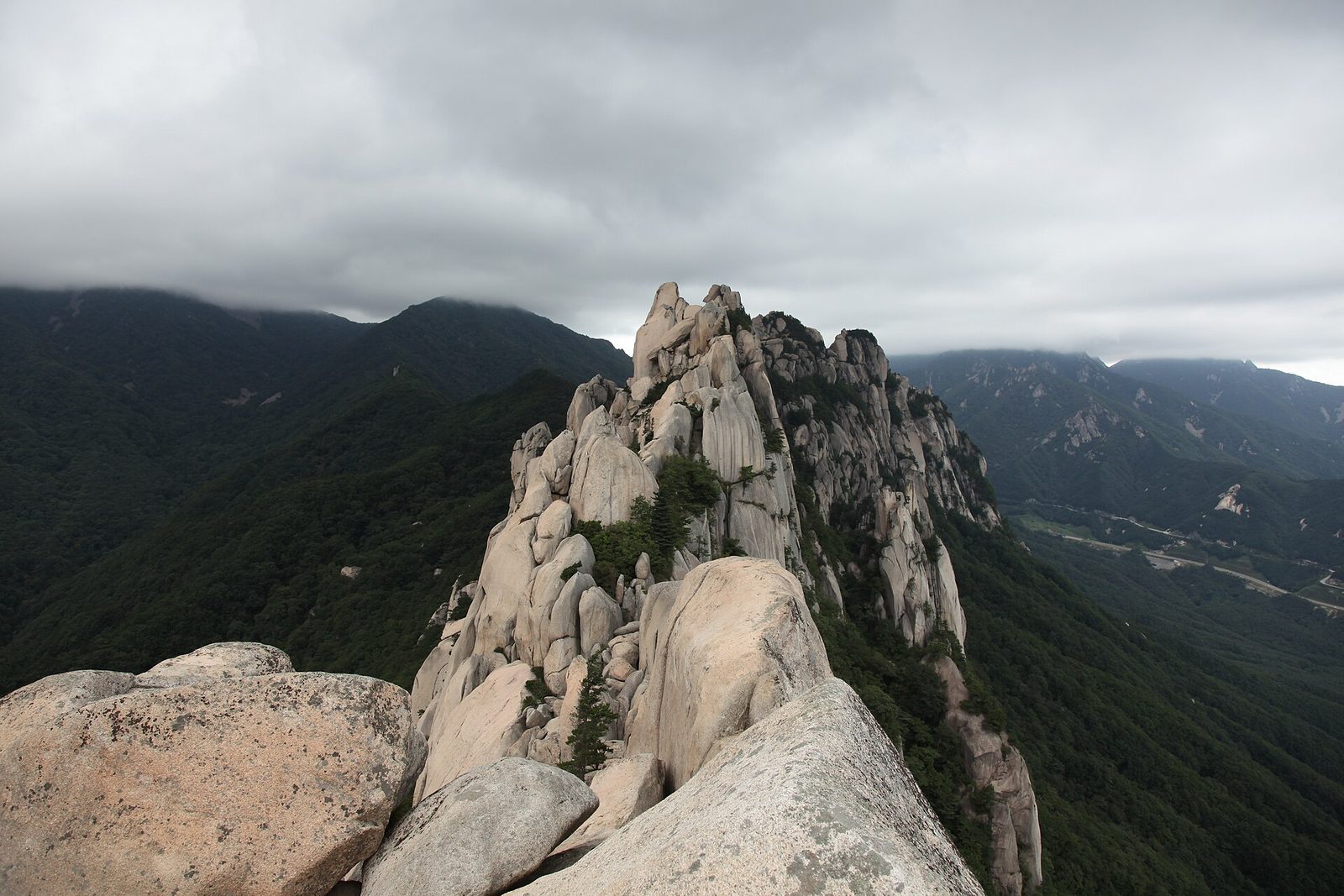
Ulsanbawi is about 3.8 kilometres one way from the Sogongwon area. The first part takes you through forest, but the final climb is the challenge: a long flight of metal stairs leads toward the rocky summit and broad views over the surrounding peaks. Allow about four to six hours for the return trip, including breaks. The stair climb can feel demanding even for people who exercise regularly.
Take your time on the way up and leave enough daylight for the descent. The viewpoint is exposed, so wind and cold can feel stronger there than in Sokcho. If your knees dislike steep stairs, Biseondae is a better choice. For Ulsanbawi, bring water, a light layer and shoes that grip; sandals and smooth-soled fashion trainers are poor options.
Full day: Daecheongbong from Osaek
Best for: experienced hikers with a full day, an early start and good fitness.
Daecheongbong is Seoraksan’s highest peak. One direct approach begins at Osaek, in Yangyang County, rather than at the Seorak-dong entrance. The ascent is about 5 kilometres, but it is steep and sustained; the short distance should not be mistaken for an easy walk. Allow roughly eight to ten hours for a return hike, with breaks and a careful descent. The forest climb offers limited views in places, so the summit is not a quick scenic stroll.
Plan transport before you go. Osaek is not the same trailhead as Sogongwon, and returning to Sokcho may require a bus connection or a taxi depending on the day and your timing. A one-way traverse from Hangyeryeong over Daecheongbong to Osaek is longer and needs more transport planning. Do not attempt the summit late in the day or in poor weather, and turn back if your pace is slower than planned.
What to bring and how to choose
- For Biseondae: water, a snack and comfortable walking shoes with grip.
- For Biryong Falls or Ulsanbawi: grippy hiking shoes, a light rain layer and enough water for several hours.
- For Daecheongbong: proper hiking footwear, food, warm layers, a charged phone and an early start. Check the forecast and trail status before leaving.
In short, choose Biseondae for a scenic introduction, Biryong Falls for a waterfall walk, Ulsanbawi for a strenuous half-day challenge, and Daecheongbong only if you are prepared for a full mountain day. Keep to marked paths, carry out your rubbish and leave time to get back to your bus stop before dark.
Frequently Asked Questions
How should I choose between an easy, moderate, and full-day hike?
Choose based on your available time, fitness, and comfort with steep or uneven paths. An easy walk is a good choice for a relaxed visit or limited hiking experience. A moderate route takes more effort, while a full-day hike needs good stamina and careful planning. Check the route details before setting out.
What should I bring for a Seoraksan hike?
Wear sturdy walking or hiking shoes, since trails may include rocks, steps, and uneven ground. Bring water, snacks, and clothing you can adjust if the weather changes. For a longer route, carry enough food and check the forecast and trail conditions before you go.
Can I fit more than one hike into a day?
It may be possible to combine a short walk with another activity, but trying to complete several demanding routes can make the day rushed. Allow time for breaks and getting between trail areas. If you want a full-day hike, focus on one route and check for current trail closures or conditions before leaving.