Korean table manners are relaxed in most everyday restaurants, and nobody expects visitors to know every rule. Still, a few customs are worth knowing, especially if you are eating with Korean friends, colleagues or older people. These nine will cover almost every situation.
1. Let the eldest start
Age and seniority matter at a Korean table. Traditionally the oldest or most senior person picks up their spoon or chopsticks first, and others follow. In a casual group of friends this is relaxed, but with older people or at a business meal it is a good habit to wait a moment.
2. Use the spoon for rice and soup
Koreans eat rice and soup with a long-handled spoon and use metal chopsticks for side dishes. Unlike in some neighbouring countries, rice bowls are normally left on the table rather than lifted to the mouth.
3. Don't stand chopsticks upright in rice
Chopsticks stuck upright in a bowl of rice resemble an offering made at memorial rites for the dead, so avoid it. Rest them on the table or on a holder when you are not using them.
4. Share the side dishes, and enjoy the refills
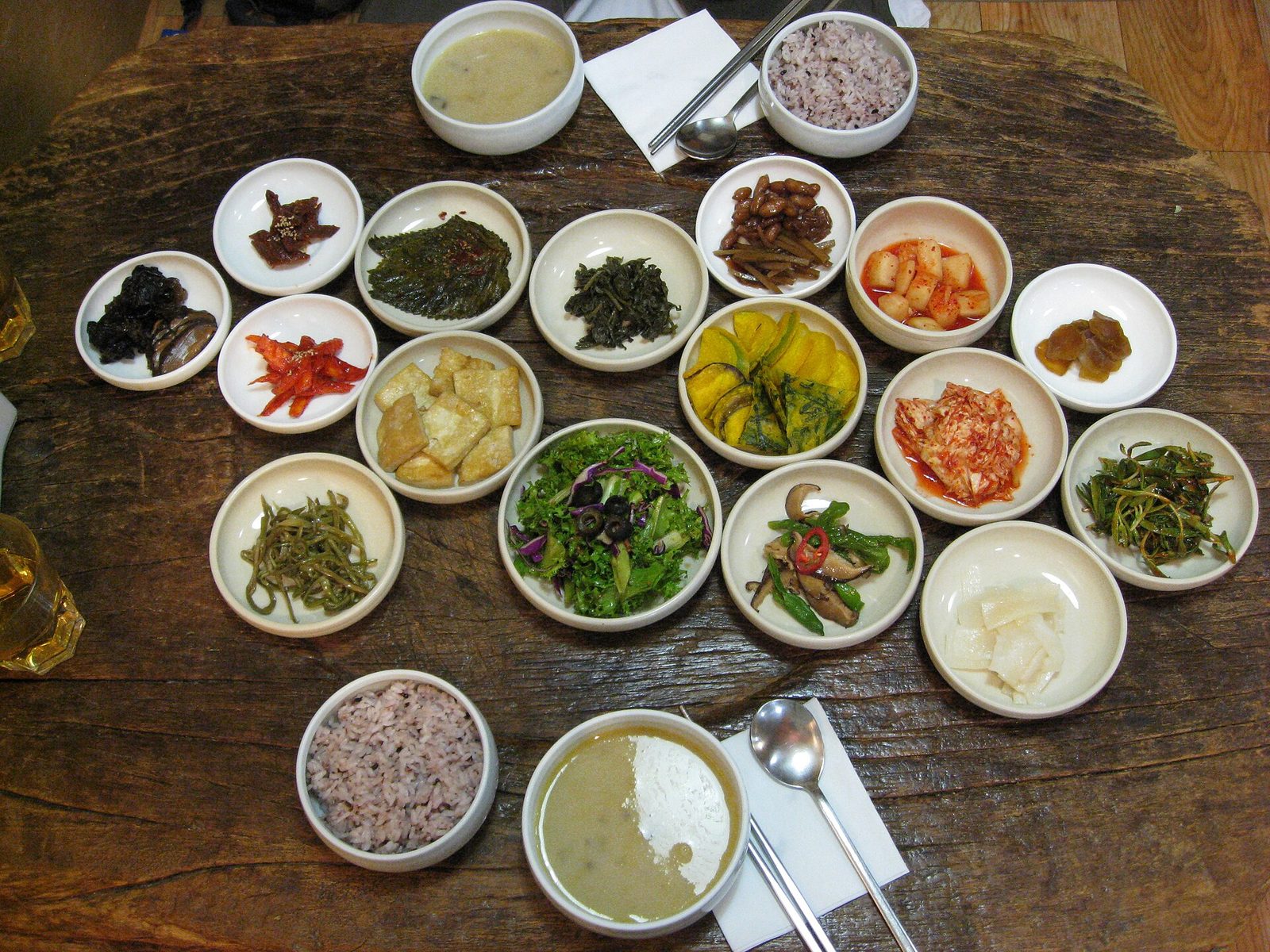
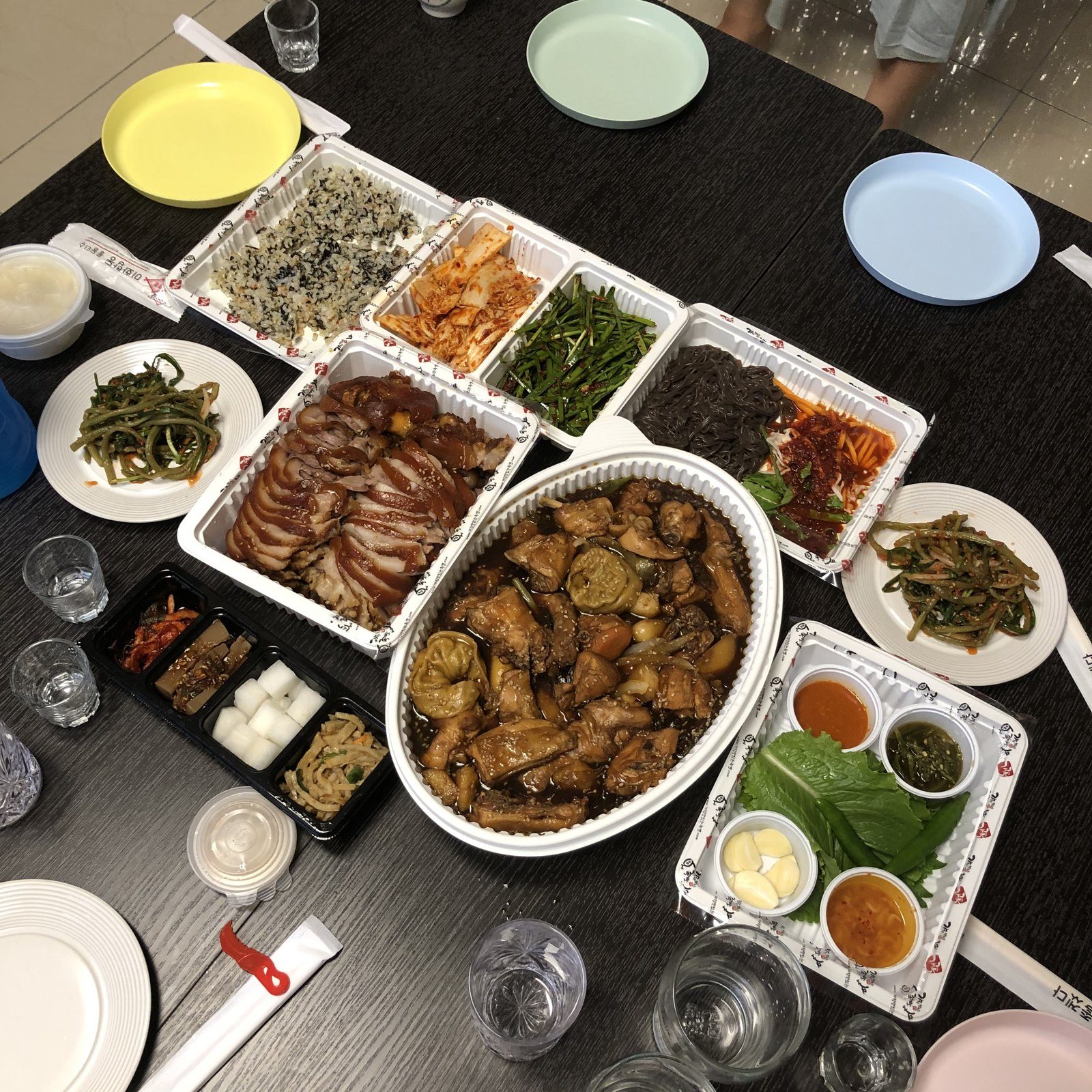
The small side dishes (banchan) that arrive with your meal are for the whole table. Take what you will eat from the shared plates rather than piling food onto your own. Refills are usually free; ask politely or use the self-service bar if there is one.
5. Many dishes are for the table
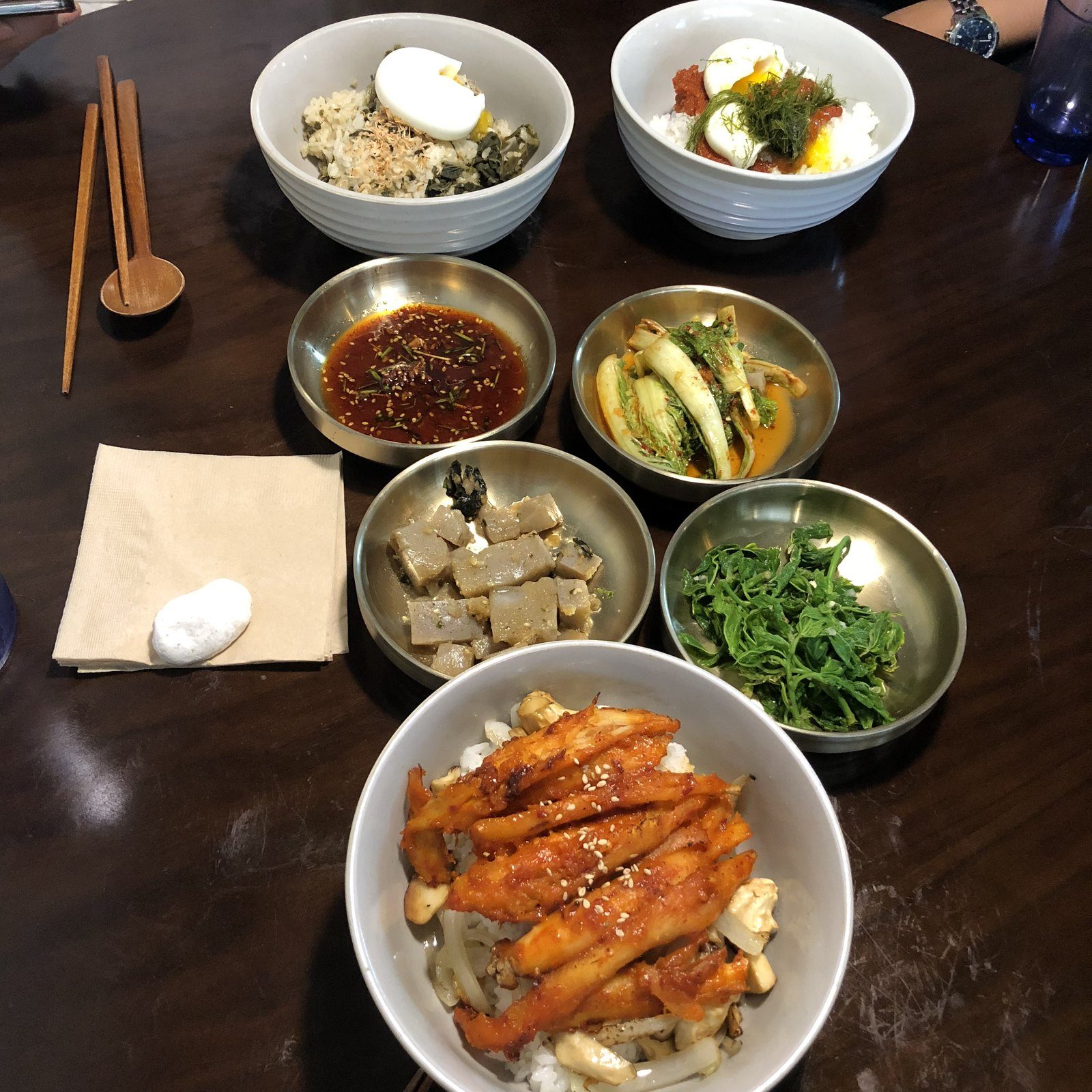
Stews, barbecue and pancakes are often cooked or served for sharing. At barbecue restaurants, staff may cook the meat or leave it to you, and cut it with scissors. Scissors at the table are completely normal.
6. Pour for others, not for yourself
When drinking alcohol such as soju or beer with others, it is polite to pour for the people around you and let them fill your glass, rather than pouring your own. When someone older pours for you, hold your glass with both hands, or with one hand supporting the other.
7. Turn slightly away when drinking with elders
In formal settings, younger people often turn their head slightly away from older people when they drink. You won't offend anyone by forgetting, but Korean companions will notice and appreciate it.
8. Call the staff, and serve yourself water
Staff won't keep checking on your table. When you need something, press the call button or say "jeogiyo" (excuse me). Water is free but often self-service from a dispenser or fridge. See how to order Korean food for the full process.
9. Pay at the counter, and don't tip
Bills are usually paid at the counter by the door. In Korean groups, one person often pays, and it is common for the senior person or the host to treat; others may offer to pay for the next round or for coffee. Splitting is also normal among friends. Tipping is not expected.
A few smaller things
- Blowing your nose at the table is considered impolite. Step away if you need to.
- Saying "jal meokgesseumnida" (I will eat well) before a meal someone has prepared or paid for, and "jal meogeosseumnida" (I ate well) afterwards, is a warm gesture.
- Don't worry about perfection. Courtesy and a willingness to try matter far more than knowing every rule.
For the phrases you will use most, see 10 Korean restaurant words worth knowing, and if the menu is only in Korean, try our guide to reading a Korean menu.
FAQ
Is it rude to lift your rice bowl in Korea?
It isn't a serious offence, but Korean custom is to leave the bowl on the table and eat rice with a spoon.
Do I need to tip in Korea?
No. Tipping is not expected in Korean restaurants.
Who pays when eating with Korean friends?
Often the older person or the host pays, and others return the favour another time. Splitting the bill is also common among friends.