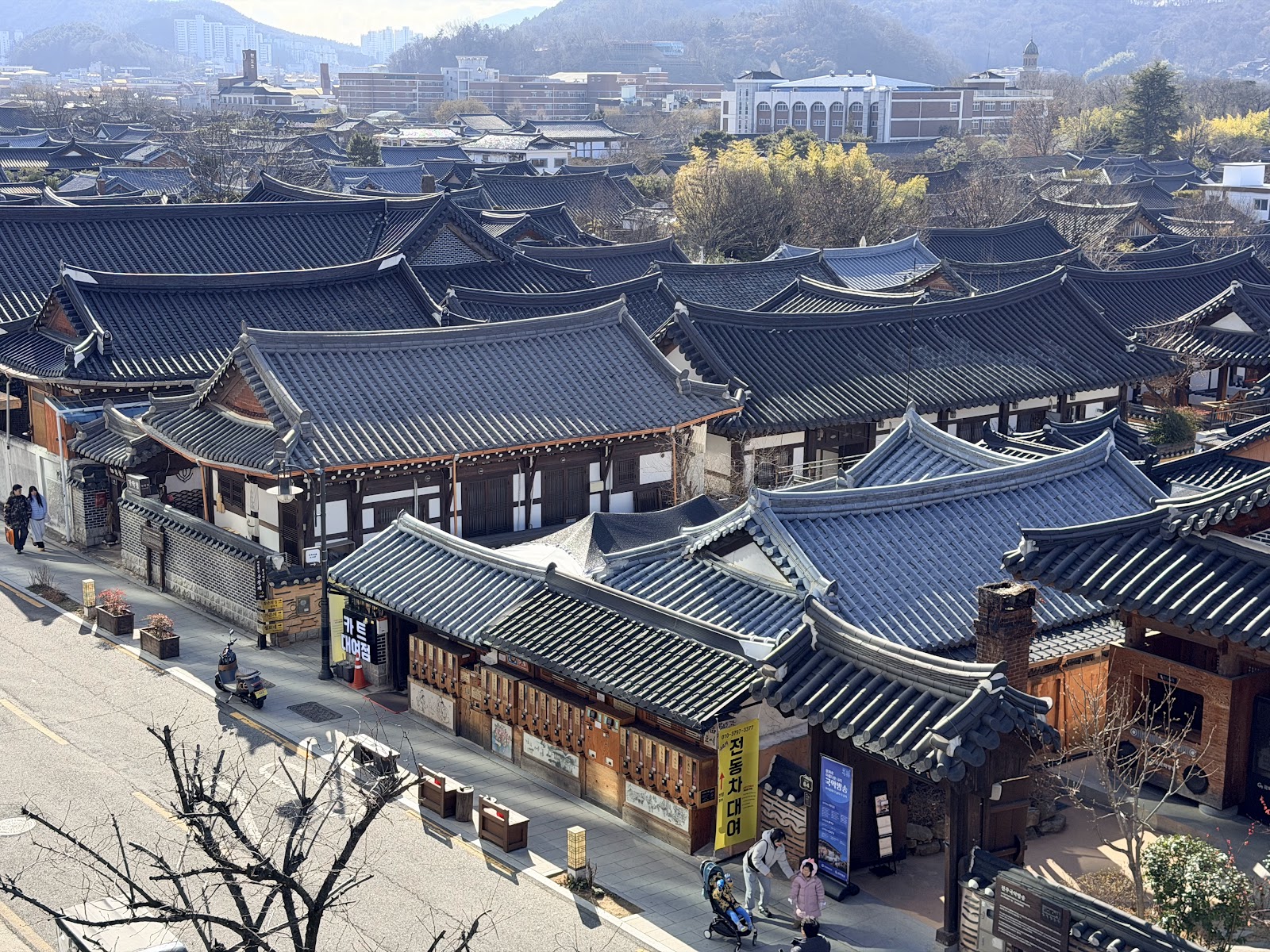
Jeonju is a rewarding day trip from Seoul if you leave early and keep your plans focused. The main draw is Jeonju Hanok Village, a walkable neighborhood of traditional Korean houses, small museums, cafés, and food stalls. You can get there by KTX train or express bus; the train is usually the simpler choice when you want a more predictable journey, while the bus can be cheaper.
Choose between train and bus
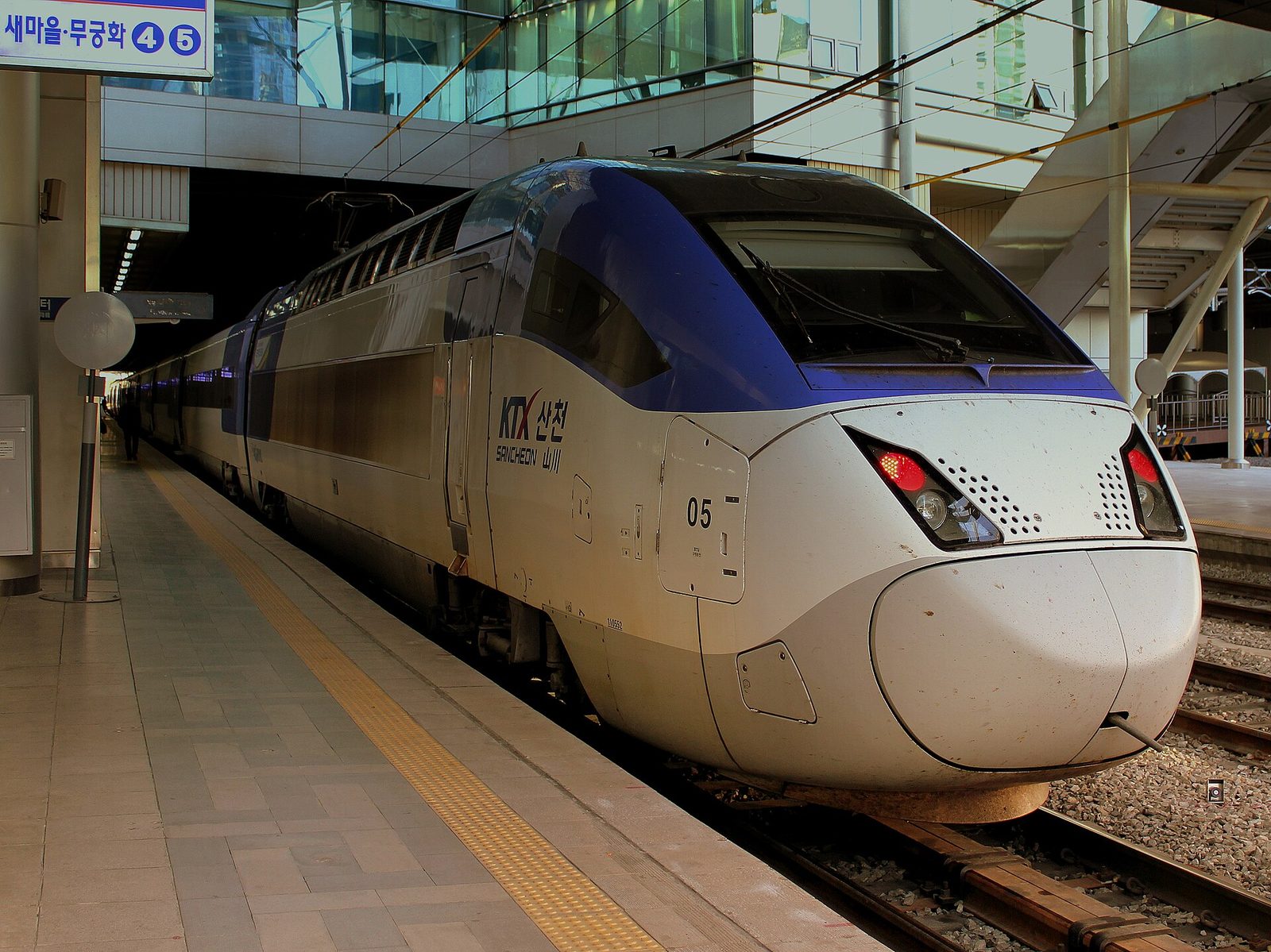
KTX from Yongsan Station
Most KTX trains to Jeonju leave from Yongsan Station, not Seoul Station; reach Yongsan on Seoul Metro Line 1 or the Gyeongui–Jungang Line. Some trains also run from Suseo Station in south-east Seoul, near Gangnam: these were the separate SRT service until the two operators merged in September 2026, so you can now search both stations in one place (see our KTX guide). The train journey is usually around 1 hour 40 minutes to 2 hours, depending on the service. A one-way standard-class ticket is roughly ₩34,000–₩40,000 (2026).
Book through Korail’s app (renewed as Korail+ in 2026) or its official English website. Reserve a return seat in advance for weekends and public holidays, when popular departures can fill up. Check current schedules and fares before you travel.
Express bus from Central City
Express buses to Jeonju leave from Central City Terminal, beside Seoul’s Express Bus Terminal. The terminal is connected to Express Bus Terminal Station on subway Lines 3, 7, and 9. The ride commonly takes around 2.5 to 3.5 hours, but traffic can make it longer. One-way fares are roughly ₩15,000–₩25,000 (2026), depending on the bus class.
Look for Jeonju on the ticket screen: the Seoul service arrives at Jeonju Express Bus Terminal, not Jeonju Station. Tickets are available through Kobus or T-money GO. If your return is on a weekend evening, book it early so you are not left with a late departure.
Getting from the station to the village
Jeonju Station is about 4–5 km from Hanok Village. A taxi usually takes around 15–20 minutes, depending on traffic. City buses also connect the station area with the center; tap a T-money transport card when boarding and use Naver Map or KakaoMap to find a current route. If you arrive by express bus, the terminal is closer: a taxi to the village is generally around 10–15 minutes.
For a first visit, a taxi from either terminal saves time and avoids figuring out a bus route with luggage. Ask for “Jeonju Hanok Village” or show the driver “전주한옥마을” on your phone. The village itself is best explored on foot, so wear shoes you can walk in on uneven lanes.
A simple day-trip route
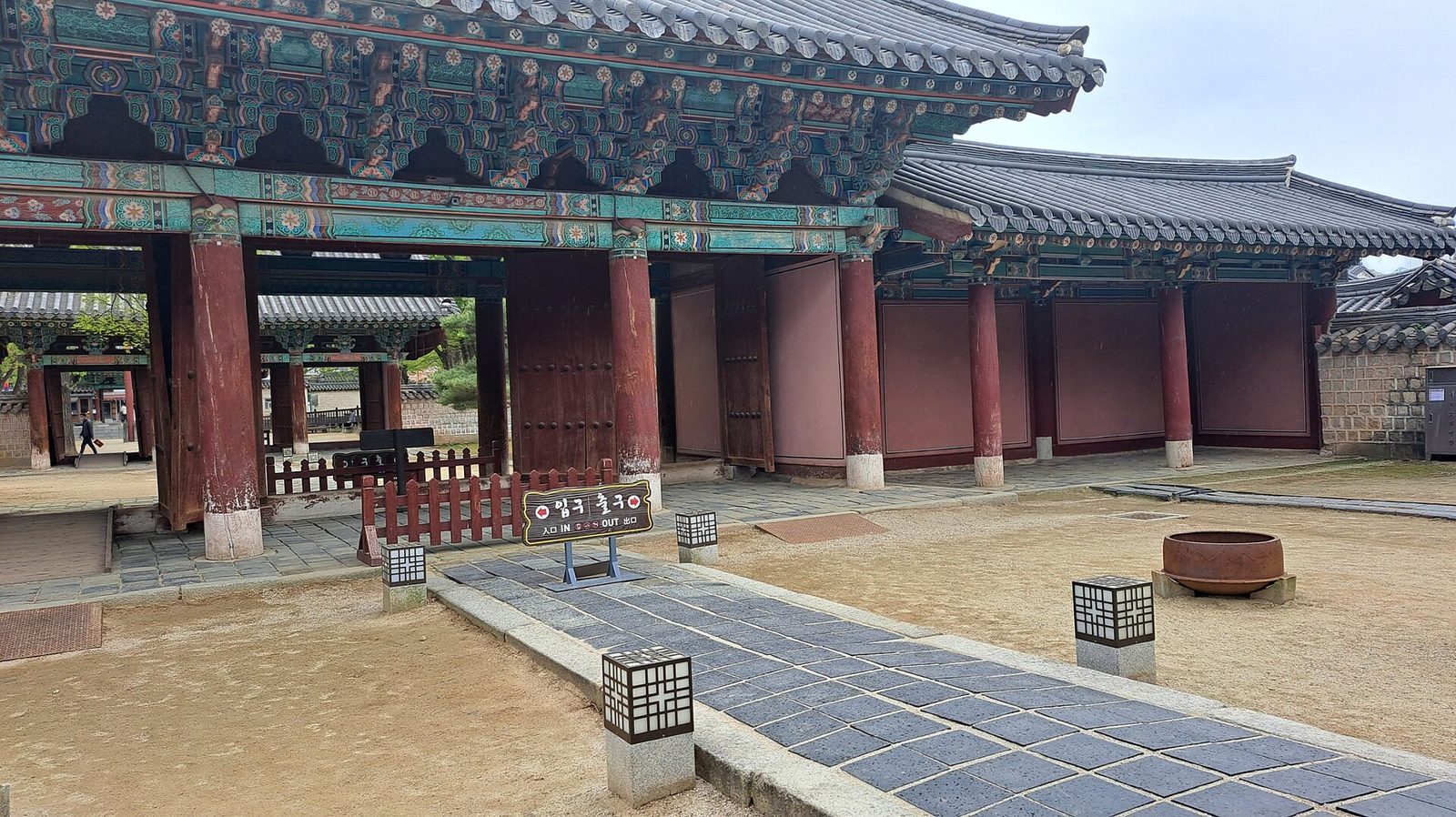
- Start at Gyeonggijeon Shrine. This historic compound is an easy first stop near the main village streets. It is known for a portrait of Yi Seong-gye, the founder of the Joseon dynasty. Follow signs and posted visitor instructions inside.
- Walk past Jeondong Cathedral. The red-brick church stands near the village entrance, across from the area around Gyeonggijeon. It makes a striking contrast with the tiled hanok roofs. Be respectful if services are taking place and follow any access notices.
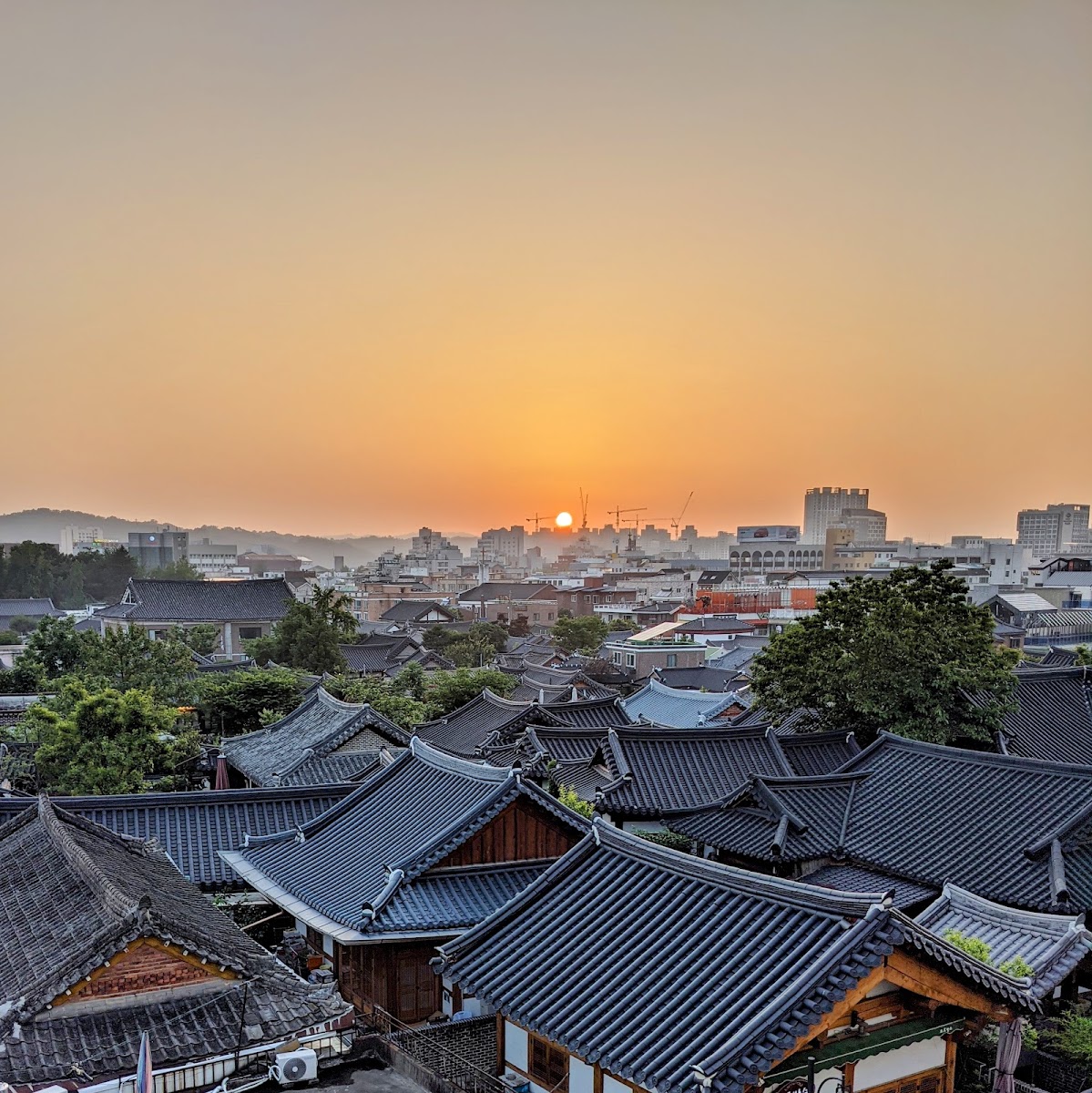
- Climb to Omokdae for a view. This small pavilion above the village offers a good look across the rooftops. The uphill approach is short but steep in places, so take your time.
- Leave room for lunch and a slow wander. Explore the lanes around Taejo-ro and Girin-daero, where you will find craft shops, cafés, and traditional-house courtyards. Some hanok buildings are private homes, so do not enter unless a place is clearly open to visitors.
What to eat in Jeonju
Jeonju is especially known for bibimbap, or 비빔밥: rice topped with vegetables, egg, and other ingredients, often served in a hot stone bowl. Another local favorite is kongnamul gukbap, 콩나물국밥, a warming rice and bean-sprout soup. Restaurants around the village offer both, but menus and crowds vary; if one place has a long queue, look down a side street rather than waiting through your whole lunch break.
For a sweet snack to carry on your walk, look for PNB Choco Pie, a well-known Jeonju bakery treat. You will also see stalls selling hotteok (호떡), a filled griddled pancake, and other street snacks. Check whether a price is shown before ordering, especially at busy stalls.
Make the return journey easy
Allow time to get back to your departure terminal. From the village, traffic can slow taxis, and buses need time to reach Jeonju Express Bus Terminal. For a train home, remember that Jeonju Station is farther from the village than the bus terminal. Use your maps app to check the route before leaving and aim to arrive at the station or terminal well before boarding.
A day trip works best with one main sightseeing loop, a relaxed meal, and a reserved ride back. Bring a payment card and some cash for small purchases, keep your Korail or bus ticket accessible, and avoid filling the day with distant attractions. That leaves time to enjoy the tiled roofs and quiet alleys that make Jeonju feel different from Seoul.
Frequently Asked Questions
Is Jeonju Hanok Village a realistic day trip from Seoul?
Yes, but expect a long day because you need to travel to Jeonju and back as well as visit the village. Start early, check return schedules before you go, and leave enough time to reach your departure point. If you want a slower visit, staying overnight may be more comfortable.
Should I take a train or a bus from Seoul?
Both can be practical options. Compare the departure point, journey time, transfers, and return schedule for your travel date rather than choosing by vehicle type alone. Check current timetables and ticket availability, and consider booking ahead if you are travelling on a busy weekend or holiday.
How do I get from Jeonju Station or the bus terminal to the village?
Plan for a separate local journey after arriving in Jeonju; the station and bus terminal are not inside the Hanok Village. You can check local bus routes or take a taxi, depending on your preference and arrival point. Use a current map to confirm the route and allow extra time.