Busan is South Korea’s second-largest city, and its attractions are spread between the coast, busy shopping districts, and steep hillside neighborhoods. Rather than crossing town several times a day, choose one or two nearby areas for each day. The Busan Metro is easy to use, but buses are useful for places such as Gamcheon Culture Village and Huinnyeoul. Load a T-money or Cashbee transit card at a convenience store, and use Naver Map or KakaoMap for routes; Google Maps has limited walking and transit directions in Korea.
Haeundae: beach, coastal walks, and seafood
Haeundae Beach is a good first stop if you want the classic Busan seaside view. Take Metro Line 2 to Haeundae Station and walk toward the water. From the beach, follow the coastal path around Dongbaekseom Island for views of the bay and the APEC House. The route is a pleasant break from the crowded beachfront streets.
For a longer outing, the Haeundae Blueline Park train and beach train run along the coast between Mipo, Cheongsapo, and Songjeong. Mipo is near the beach; Cheongsapo is a good place to pause for grilled shellfish and sea views. Seats and popular time slots can sell out, so reserve ahead through the official Blueline Park website if you have a fixed plan. In restaurants, look for jogae-gui (grilled shellfish) or hoe (raw fish).
Gwangalli: a relaxed evening by the bridge
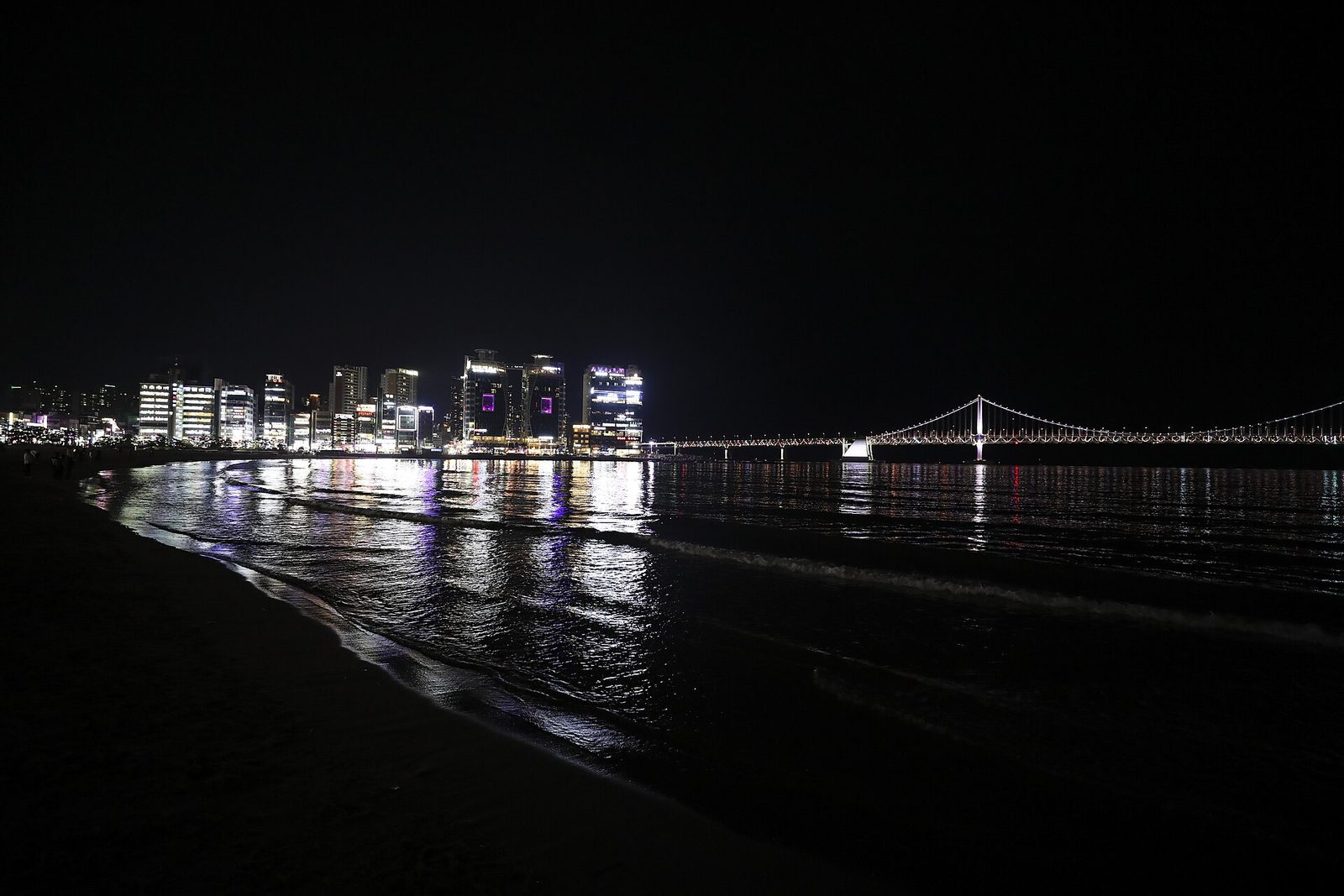
Gwangalli Beach faces the illuminated Gwangan Bridge, making this a better area for an evening stroll than an early-morning sightseeing sprint. From Gwangan Station on Line 2, walk toward the sand; Geumnyeonsan Station is another useful stop at the beach’s southern end. Cafés and casual restaurants line the shore, and many have bridge views.
Come before sunset to find a seat or take photos as the lights come on. If you are choosing between Gwangalli and Haeundae for one beach evening, Gwangalli is more compact and lined with places to eat, while Haeundae has a larger beach and more major attractions nearby. Busan’s scheduled drone shows are held here on some dates, but schedules can change, so confirm before planning your night around one.
Seomyeon: a useful base and a food stop
Seomyeon sits where Metro Lines 1 and 2 meet, so it is a practical place to stay if you want to explore different parts of the city. The underground shopping area connects with the station, while the streets above have shops, bars, and restaurants. For a quieter café break, walk to Jeonpo Café Street, east of the station.
This is a good neighborhood to try dwaeji-gukbap, a pork-and-rice soup associated with Busan. Look for signs reading 돼지국밥; a typical order arrives with rice and small side dishes, and you can adjust the seasoning with salted shrimp or chives. Seomyeon is also handy after a day out: its central location can save you from a late cross-city transfer.
Nampo-dong and Jagalchi: markets and old Busan
For a full day of city sights and local food, take Line 1 to Jagalchi or Nampo. Jagalchi Market is the famous seafood market; Gukje Market and the nearby Gwangbok-dong shopping streets make it easy to keep exploring on foot. BIFF Square is known for its film-related street displays and snack stalls, including 씨앗호떡 (ssiat hotteok), a warm pancake filled with seeds and nuts.
Browse Bupyeong Kkangtong Market for snacks and market food, then head to Bosu Book Street if you want a quieter change of pace among the small secondhand bookshops. Markets can be busy, and individual stalls do not all keep the same schedule. If you eat seafood, agree on the fish and price before ordering, and ask what is included in the meal.
Gamcheon Culture Village: color, stairs, and views
Gamcheon’s painted houses and narrow lanes make it one of Busan’s most photographed neighborhoods, but it is a residential area, not a theme park. From Toseong Station on Line 1, follow signs for the village bus stop and take a local bus uphill. The final approach is steep, so wear shoes with a good grip and avoid bringing bulky luggage.
At the village information center, you can usually find a map for the walking routes. The popular Little Prince photo spot can have a queue; allow time to explore side lanes rather than stopping only for the main picture. Keep voices low, do not enter private homes, and take photos respectfully. Carry water, especially on a warm day, as the route includes plenty of stairs.
Yeongdo: a quieter coastal detour
Yeongdo sits across the water from Nampo and offers a different feel from the major beach districts. Huinnyeoul Culture Village follows a cliffside road with sea views, small cafés, and stairways down toward the water. From Nampo, take a local bus toward Huinnyeoul; check the destination on the bus display before boarding, as several routes cross the island.
The paths are narrow and include steep steps, so this is not the best choice with a stroller or heavy bags. Give yourself time to walk slowly and stop for the view. You can pair Huinnyeoul with Nampo, but plan your return bus before the evening gets late rather than assuming every bus follows the same route.
Beomeosa: a temple and mountain air
If you want a break from the coast, visit Beomeosa Temple on Geumjeongsan Mountain. Take Line 1 to Beomeosa Station, then connect to a local bus or taxi for the uphill ride to the temple area. The temple’s wooden halls and mountain setting make it a rewarding half-day trip, especially if you enjoy walking.
Wear shoes suitable for uneven paths and bring a light layer; the mountain can feel cooler than the city center. Be respectful around worshippers, keep your voice low, and follow signs about photography inside buildings. If you want to hike beyond the temple, check the route and weather first and leave enough daylight for the return journey.
Simple planning tips
Busan Station is the main KTX station, while Gimhae International Airport connects to the Busan-Gimhae Light Rail Transit. From the airport, the light rail reaches Sasang, where you can transfer to Metro Line 2, or Daejeo, where you can transfer to Line 3. Allow extra time when changing lines or taking a bus up a hill. For current route maps, attraction details, and event information, check Naver Map and the official Busan tourism site, Visit Busan.
Frequently Asked Questions
Which area of Busan is best to stay in for a first visit?
It depends on what you want nearby. Haeundae and Gwangalli suit travelers drawn to the coast, while Seomyeon is a practical base for exploring different parts of the city. If markets and older downtown sights are your priority, consider staying near Nampo. Check transport connections before choosing.
How should I plan my sightseeing across Busan’s different areas?
Group nearby sights together instead of crossing the city repeatedly in one day. For example, focus on one coastal area or one downtown area at a time, and leave room for meals and breaks. Busan is spread out, so a shorter list of places can make each day more relaxed.
What is the easiest way to get around Busan?
Public transportation is useful for getting between many of Busan’s neighborhoods, though some trips may take longer than the map suggests. Check your route before setting out and allow time for transfers or walking. Taxis can be convenient for a direct trip, especially when public transport is less practical.