Flying is the usual way to travel from Seoul to Jeju, while Busan is a closer call: a flight is short, but the KTX train may be simpler door to door. Korea has several low-cost carriers, and their fares can look very cheap before you add baggage or choose a seat. A little planning helps you compare the full journey, not just the time in the air.
Choose the right airport and route
For Jeju, search for flights from Gimpo Airport (GMP) to Jeju International Airport (CJU). Gimpo is on the west side of Seoul and is served by subway Lines 5 and 9, as well as the all-stop Airport Railroad (AREX). It is not the same airport as Incheon, where most international flights arrive.
For Busan, flights usually run from Gimpo to Gimhae International Airport (PUS). The flight takes about an hour, but allow time to travel to Gimpo, check in, pass security and get from Gimhae to your destination. The KTX from Seoul Station to Busan Station takes roughly two and a half hours and delivers you closer to central Busan. Compare the whole trip before booking.
Budget airlines and booking
Carriers you may see on domestic routes include Jeju Air, Jin Air, T’way Air, Air Busan and Eastar Jet. Aero K also operates some domestic services. Routes and schedules vary. Search by airport code as well as city name, and compare the same travel date across airlines. An airline’s English-language website or app is often the clearest place to check what a fare includes.
Sale fares can be inexpensive, but they change with demand and travel dates. As a rough guide, a one-way promotional fare may be around ₩20,000–₩80,000 before optional extras (2026); it is not a guaranteed price. Basic fares may charge separately for checked baggage or advance seat selection. Check the weight and size rules for your exact ticket, especially if you have a large suitcase. For exact baggage and schedule rules, check current details on the airline’s official site or app.
Enter your name exactly as it appears in your passport. Keep your passport with you for check-in and boarding; airline staff may ask to verify your identity. If you booked through a third-party site, save the booking reference and airline confirmation so you can find the reservation easily.
Getting through the airports
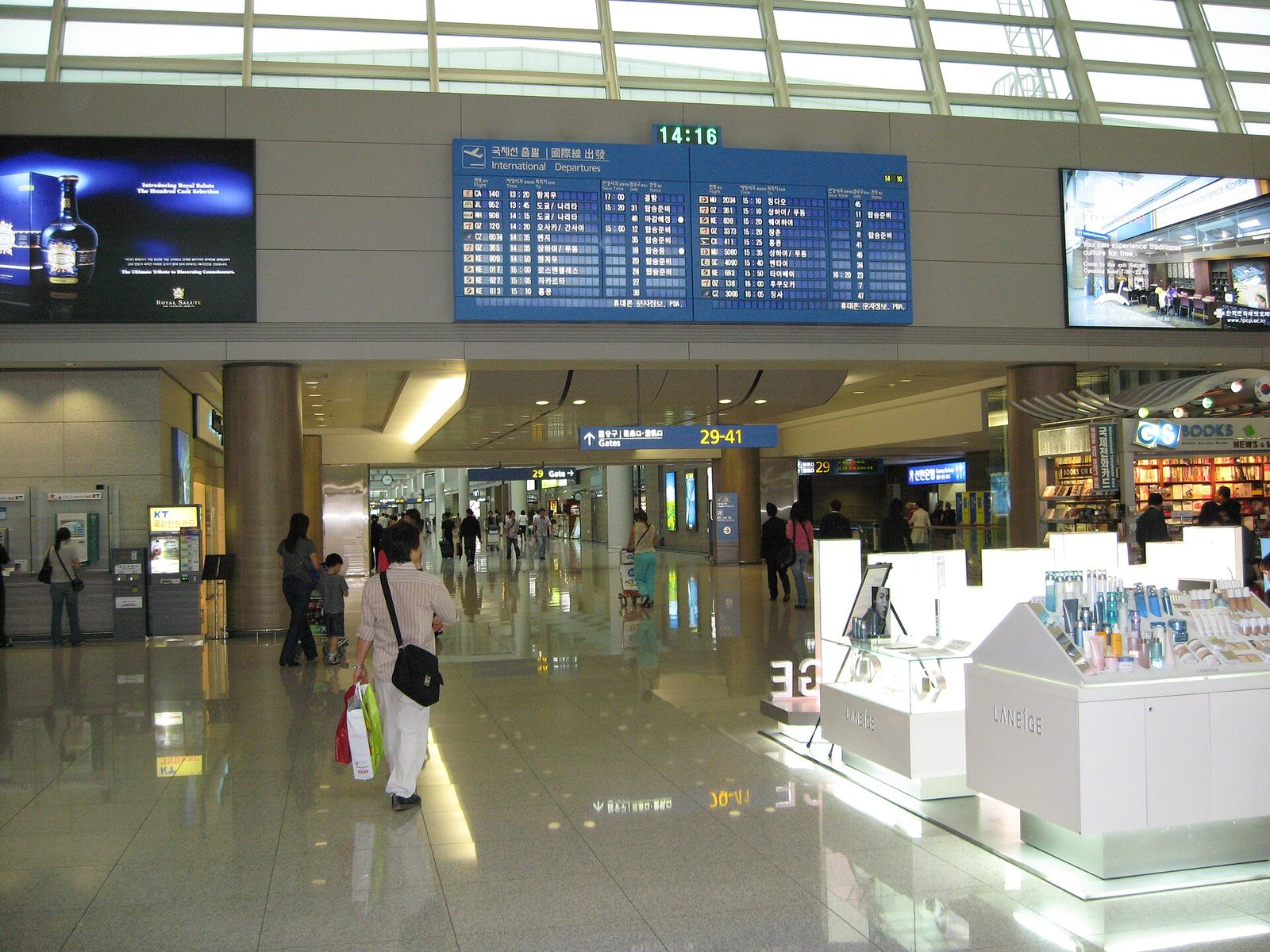
At Gimpo, follow signs for the domestic terminal (국내선, gungnaeseon), not the international terminal. The subway and AREX stations connect to the airport complex, but allow extra time to walk to your airline’s check-in area. At Jeju, arrivals are close to Jeju City, so a taxi or local bus is convenient for many hotels there.
Gimhae Airport has a station on the Busan-Gimhae Light Rail. Ride to Sasang to transfer to Subway Line 2, which serves areas including Seomyeon and Haeundae. If you are heading to Busan Station for a ferry or onward train, include the extra transfer time in your plan. A transport card such as T-money is useful on local public transport; keep some time in reserve if you are travelling with luggage.
Planning a Jeju stay
Jeju Airport is in Jeju City, but many visitors stay farther south. The Airport Limousine 600 serves the Jungmun area and Seogwipo; check the route and destination before boarding. Jeju has no subway, and buses can take longer than driving between sights. If you plan to visit several places in one day, consider how you will get around before choosing a hotel.
Jeju’s food is another reason to plan your stops. Look for 흑돼지 (heukdwaeji), or Jeju black pork, and 전복죽 (jeonbokjuk), abalone porridge. In Jeju City, Dongmun Market is a well-known place to browse local snacks and produce. Bus services and tourist routes can change, so check your route before setting out.
Planning a Busan stay
Gimhae Airport is west of central Busan, while popular areas such as Seomyeon and Haeundae are farther east. The light rail and Subway Line 2 make a useful route into the city, but a taxi can be easier with several bags or a late arrival. For a short visit based around Busan Station, compare a flight with the KTX from Seoul Station, including the time needed to reach each station.
Try 밀면 (milmyeon), a chilled wheat-noodle dish closely associated with Busan, or 돼지국밥 (dwaeji-gukbap), pork-and-rice soup. Seomyeon is a handy base for restaurants and Line 2 connections; Haeundae is farther along the same line. If you are flying home from Gimhae, leave enough time to return across the city rather than assuming the airport is close to your hotel.
Before you leave
Save your boarding details offline, check which terminal your flight uses, and arrive with time for bag drop and security. Domestic trips are short, but missing a flight can undo the savings from a budget ticket. For route changes, airport transfers or bus information, check current details on Naver Map or the relevant transport operator’s official site.
Frequently Asked Questions
Which Seoul airport should I use for a domestic flight to Jeju or Busan?
Check the airport shown on your ticket before you travel. Gimpo is commonly used for domestic flights from Seoul, while Incheon mainly serves international routes. Allow time to get to the correct airport, especially if you are connecting from an international flight or changing airports.
Does a budget airline ticket include checked baggage?
Not always. Baggage allowances and fees can vary by airline and fare type, so check the rules for your specific booking before packing. Also look at the limits for carry-on bags and whether options such as seat selection are included or cost extra.
Is flying from Seoul to Busan better than taking the train?
It depends on your itinerary. A flight may suit you if the airport is convenient and the schedule works, but include travel to and from both airports in your comparison. A train can be a practical alternative, particularly if you want to travel between city-center stations.