The Demilitarised Zone, the 4-kilometre-wide strip that has divided North and South Korea since the 1953 armistice, is only about an hour's drive north of Seoul. A day there is sobering and strange: peace parks with fairground rides, soldiers checking passports, a tunnel dug towards Seoul, and a view across the border into North Korea. This guide explains what you will actually see, how to pick a tour and what to bring.
What you can actually see
Most "DMZ tours" visit the area just south of the zone, in Paju, rather than the zone itself. A typical half-day or full-day tour includes some of these:
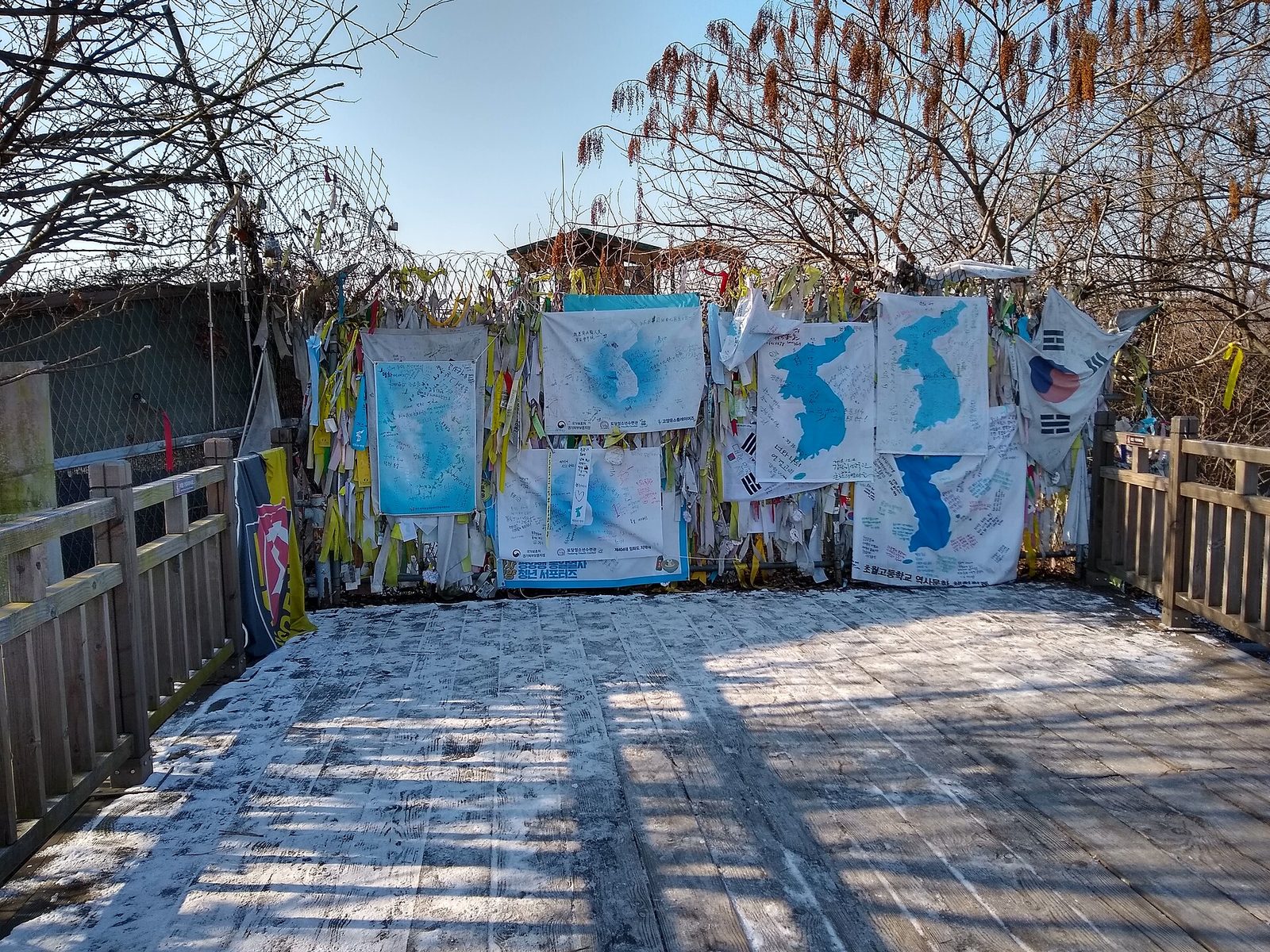
- Imjingak Peace Park: the starting point of most tours, with the Freedom Bridge, a bullet-scarred steam locomotive and fences covered in prayer ribbons left by separated families.
- The Third Infiltration Tunnel: a tunnel dug from the North and found in 1978. You walk (or ride a small monorail) down a steep slope and then stoop along the tunnel itself. Bags and phones go into lockers, and photos are not allowed inside.
- Dora Observatory: a hilltop viewpoint where, on a clear day, you can see a North Korean village and the city of Kaesong through binoculars.
- Dorasan Station: a modern station built for a railway to the North that has never run a regular service.
Some tours add a suspension bridge, a lake or a talk with a North Korean defector. Read the itinerary closely: the cheapest tours often spend most of their time at Imjingak and shops.
The JSA question
The Joint Security Area at Panmunjom, with its famous blue huts where soldiers from both sides face each other, is a different and much more restricted visit. Civilian JSA tours were suspended in 2023 and access since then has been limited and unpredictable. If a company offers a JSA tour, book well ahead, expect a strict dress code and age limit, and be ready for it to be cancelled at short notice for military reasons. Do not plan your whole trip around it.
Choosing a tour
You cannot simply walk into the restricted area: the Third Tunnel and Dora Observatory sit inside a military-controlled zone, so almost everyone goes with a licensed tour. Imjingak itself is open to anyone, and the local city runs its own bus tours from there, but rules for foreign visitors and timetables change, so most first-time visitors find a tour from Seoul simpler.
- Half-day or full-day: a half-day tour covers the main sights and gets you back to Seoul by mid-afternoon. A full day adds extra stops and lunch.
- Pick-up point: most tours collect people from central hotels or a meeting point near City Hall or Myeongdong early in the morning. Check how close it is to where you are staying.
- Guide language: confirm the tour is in English (or your language) and not a mixed group with one commentary.
- What is included: entrance fees, the tunnel monorail and lunch are sometimes extras.
- Cancellation policy: sites can close at short notice for military drills or security alerts, so choose a company that refunds in that case.
Prices change, so compare a few operators on the day you book. A standard half-day tour is usually far cheaper than any JSA package.
Before you go
- Bring your physical passport. Soldiers check it at the checkpoint. A photo or copy is not accepted, and you will be turned away without it.
- Check the closing days. The Third Tunnel is usually closed on Mondays and some sites close on national holidays; tours often swap in other stops on those days. Confirm with your operator.
- Follow photo rules. Guides tell you where photos are not allowed, especially of military posts. Do as they say.
- Wear good shoes. The tunnel slope is steep and the way back up is tiring. The tunnel is not suitable for people who struggle with stairs or tight spaces.
- Dress for the weather. The area is exposed and colder than Seoul in winter.
Is it worth it?
If you are curious about modern Korean history, yes. It is less dramatic than films suggest, and parts of it feel like a tourist attraction, but standing a few kilometres from North Korea and hearing how families were split by the border stays with you. If you only have two or three days in Seoul and prefer food and neighbourhoods, it is fine to skip it. For other ideas, see our day trips from Seoul.
FAQ
Can I visit the DMZ without a tour?
You can visit Imjingak Peace Park on your own, but the Third Tunnel and Dora Observatory are in a restricted area, so in practice you need an organised tour.
Is the JSA at Panmunjom open to tourists?
Civilian JSA tours were suspended in 2023 and access has been limited since. If one is offered, book early and expect possible cancellation.
What do I need to bring on a DMZ tour?
Your physical passport, comfortable shoes and weather-appropriate clothes. Without your passport you will not get past the checkpoint.