Sokcho · Culture
Naksansa Temple: A Seaside Sanctuary Above the East Sea
By Korea Plainly · Published
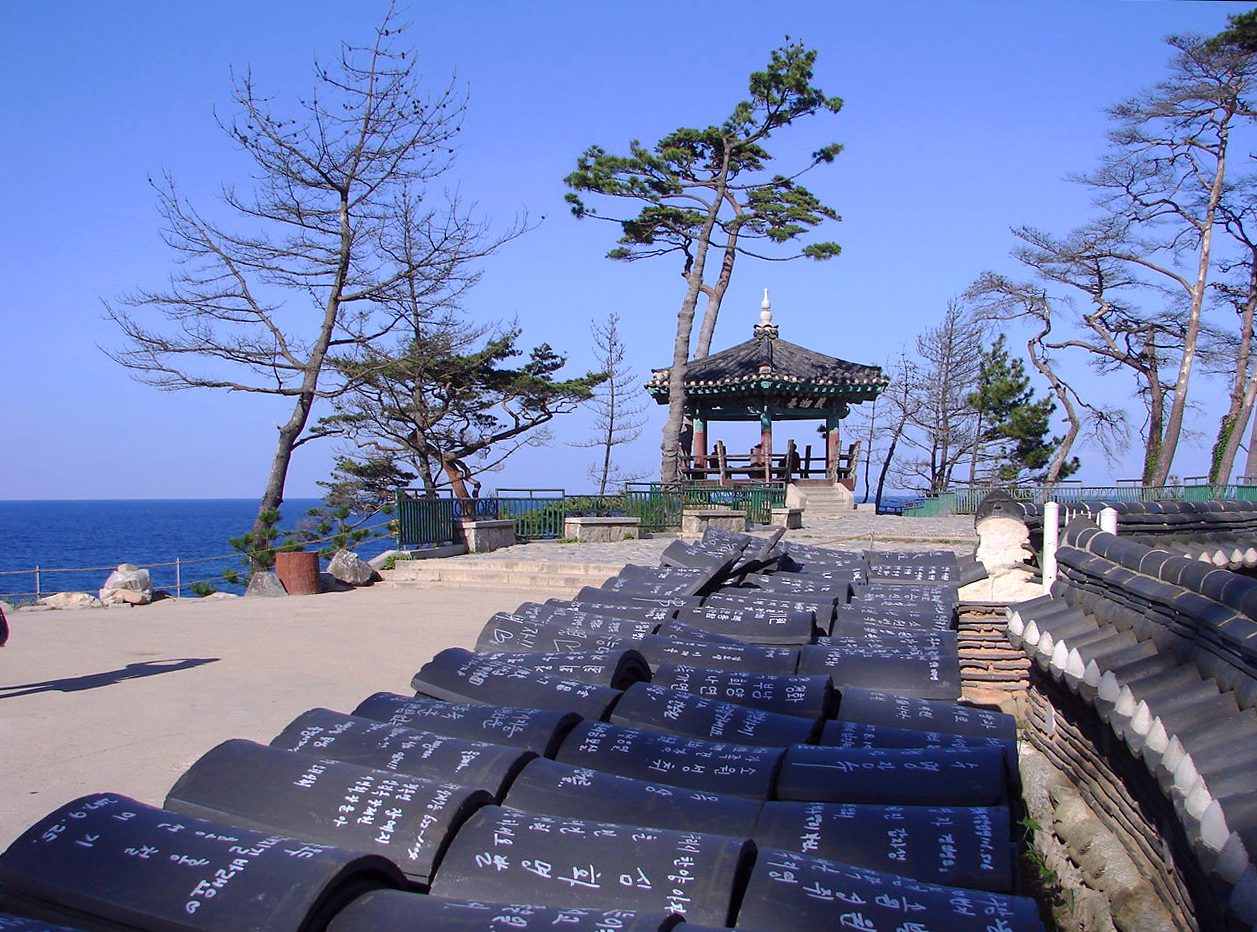
Photo: Steve46814, CC BY-SA 3.0, via Wikimedia Commons
At a glance: Naksansa is a historic Buddhist temple overlooking the East Sea, worth visiting for its coastal views, quiet courtyards and cliffside shrines.
Visiting Naksansa Temple
- Region
- Sokcho
- Address
- 100 Naksansa-ro, Ganghyeon-myeon, Yangyang, Gangwon-do
- Google rating
- 4.5/5 from 10,686 reviews (October 2026)
Opening hours, prices and closures change. Check the map before you go.
What Naksansa Temple is
Naksansa Temple stands on the coast in Yangyang, a short trip from Sokcho. Its setting is part of its appeal: temple buildings and wooded paths sit above the East Sea, with the sound and sight of the water close by. On a clear day, the view from the grounds makes a striking contrast with the quiet, sheltered spaces inside the complex.
The temple is associated with the Buddhist monk Uisang, who is traditionally credited with founding it in 671. It has been rebuilt many times over the centuries, so its present-day appearance reflects a long history of destruction and renewal. Naksansa is still a place of Buddhist worship, as well as a popular stop for visitors exploring the coast.
In Korean, “sa” means temple, so you may also see the name written as Naksan-sa. The complex covers more than one building and viewpoint; allow time to walk between them rather than treating it as a single hall with a quick photo stop.
What to see and do
Make your way through the temple grounds at an unhurried pace. Wontongbojeon, the main hall, is a central place to pause and appreciate the temple’s Buddhist architecture. Nearby, look for the seven-story stone pagoda and the surrounding courtyards. The buildings, painted details and devotional objects reward a closer look, but remember that some areas are places of worship rather than display spaces.
One of Naksansa’s best-known features is the Haesugwaneumsang, a large statue of the bodhisattva of compassion overlooking the coast. It is a prominent landmark in the grounds and a natural place to take in the sea views. Follow the paths toward Uisangdae Pavilion, a small pavilion at a coastal viewpoint named for the monk Uisang.
Continue to Hongryeonam, a small hermitage built beside the sea-facing rocks. The approach brings you close to the shoreline, and the change from the temple courtyards to the rugged coast is one of the most memorable parts of a visit. Take care on steps and uneven paths, particularly when they are wet or crowded.
There is no need to rush from one landmark to the next. Notice the transitions between open viewpoints, shaded paths and quiet halls. If you are interested in Korean Buddhist culture, pause to observe how worshippers use the space, while leaving them room to pray.
How to plan your visit
Plan for roughly two hours if you want to see the main halls, the statue, Uisangdae and Hongryeonam without hurrying. You can spend less time on a quick walk through the main grounds, or longer if you enjoy photography and want to linger at the viewpoints. The complex includes slopes, stairs and uneven paving, so comfortable shoes are a good idea.
Morning is a pleasant choice for a quieter walk, while later in the day can bring warm light across the East Sea. The best conditions for the view depend on the weather; a hazy or rainy day changes the experience, but the temple’s buildings and wooded paths still make the visit worthwhile. In summer, bring water and sun protection for the exposed sections.
Naksansa pairs naturally with Naksan Beach, which is close by, for a temple-and-sea outing. You can also make it part of a wider trip around Sokcho and Yangyang, combining the coast with Sokcho’s central sights or a visit to Seoraksan National Park. The temple is in Yangyang rather than central Sokcho, so plan your route around the places you want to see that day. Use the address, 100 Naksansa-ro, Ganghyeon-myeon, Yangyang, Gangwon-do, when navigating.
Naksansa has a Google rating of 4.5 from 10,686 reviews, reflecting its broad appeal as both a cultural site and a scenic coastal stop. The official temple website is available at naksansa.or.kr.
Good to know
Naksansa is an active religious site. Keep your voice low inside halls, dress respectfully, and follow any signs about photography or restricted areas. If you see people praying or making offerings, give them space and avoid interrupting for a photograph.
Because the route includes outdoor paths and exposed viewpoints, check the weather before setting out and take extra care in rain or strong wind. On busy days, give other visitors room at narrow viewpoints and steps. If you want to check current hours or prices, look them up on Naver Map before you go.
FAQ
Is Naksansa Temple in Sokcho?
It is in Yangyang, just south of Sokcho, and is commonly visited as part of a trip around the Sokcho and Yangyang coast.
How long should I spend at Naksansa?
Allow about two hours to explore the main temple grounds and coastal viewpoints at a comfortable pace.
What is the best-known sight at Naksansa?
The Haesugwaneumsang statue overlooking the sea is a major landmark. Uisangdae Pavilion and the cliffside hermitage Hongryeonam are also highlights.