Gyeongbokgung Palace: A First-Time Visitor’s Guide to Seoul’s Grand Royal Landmark
At a glance: Gyeongbokgung Palace is a historic royal complex in central Seoul, known for its ceremonial halls, gates, courtyards and garden pavilions. Address: 161 Sajik-ro, Jongno District, Seoul. Google Maps lists it at 4.6/5 from 46,914 reviews in the information checked for this guide. Check the official website before visiting for current opening information, closures and event schedules.
Why visit Gyeongbokgung?
Gyeongbokgung is one of Seoul’s most memorable places to encounter Korea’s royal history. Built in 1395 as the principal palace of the Joseon dynasty, it occupies a broad site at the foot of Bugaksan mountain. Its scale is part of the experience: visitors move through a sequence of imposing gates, open courtyards, formal buildings and quieter garden spaces, while the modern city remains close beyond the palace walls.
The name is commonly translated as “Palace Greatly Blessed by Heaven.” The complex was damaged during the Japanese invasions of Korea in the late 16th century and later underwent major reconstruction. What you see today reflects both its historic importance and the long effort to restore palace buildings and grounds. It is not a single museum building but an extensive site, so give yourself time to walk, pause and look closely at the details.
What to see inside
Enter through Gwanghwamun, the palace’s imposing southern gate, and follow the central route into the main ceremonial precinct. The sequence of gates and courtyards helps explain how the palace organized access to royal spaces. It is worth slowing down here: painted beams, carved stonework and rooflines are easy to miss if you hurry straight toward the largest hall.
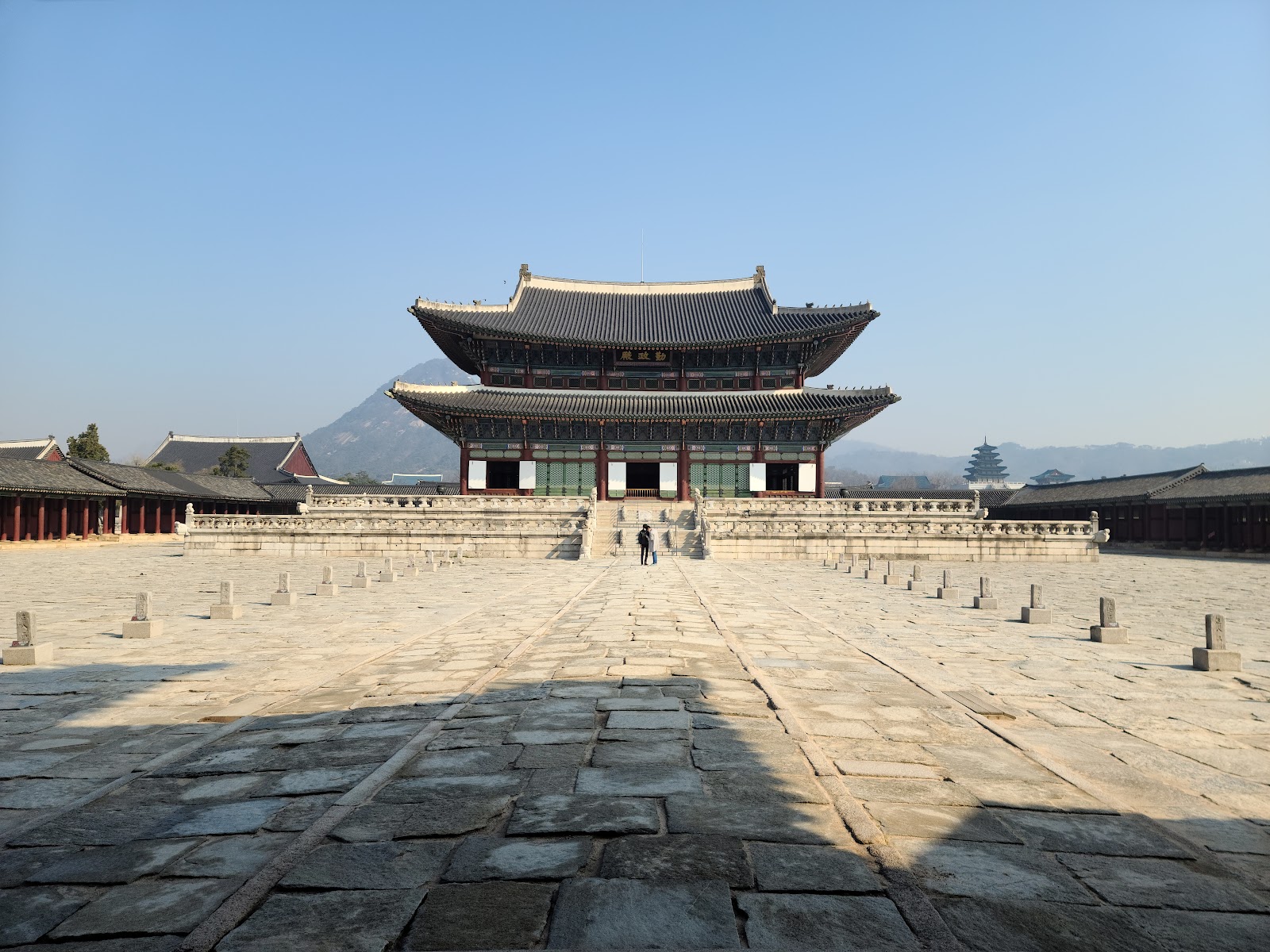
Geunjeongjeon, the throne hall, is the complex’s principal ceremonial building. It was used for important state occasions, and its elevated position and formal courtyard make it one of the most striking places to stop. Nearby, look for details in the stone markers and the arrangement of the courtyard, which reflect the palace’s carefully ordered court life.
Gyeonghoeru, the large pavilion beside a pond, offers a change of mood from the formal central buildings. It was used for royal banquets and receptions; its setting is especially photogenic when the water reflects the pavilion. Further into the grounds, Hyangwonjeong is another pavilion beside water, surrounded by a more garden-like landscape. These quieter areas are a good reason not to treat the palace as a quick photo stop.
Planning your visit
Allow a few hours if you want to explore the main buildings and garden areas without rushing. The site is extensive, and your visit may take longer if you stop for photographs, join a program or explore nearby museums. If you have limited time, prioritize the main gate, Geunjeongjeon and one of the pavilion areas, then use the official map or information on site to choose your route.
The palace is popular, so a weekday or an earlier visit may suit travelers hoping for a calmer experience, although crowds can vary. Seasonal conditions also affect the feel of the grounds: summer can be hot, while winter visits may involve cold, exposed courtyards. Wear comfortable shoes and bring weather-appropriate clothing. The site includes broad outdoor spaces, so check the forecast and plan for time outside.
Guard-related ceremonies and other visitor programs may be offered, but schedules can change. Confirm details on the official website rather than relying on an old itinerary or an unverified online post. The same applies to admission conditions, opening information and temporary closures.
Making the most of the neighborhood
Gyeongbokgung sits in Jongno, an area rich in historic sights and traditional streets. You can pair the palace with a separate walk through nearby Seochon, west of the grounds, where cafés and small shops sit among residential lanes. Bukchon is another well-known traditional neighborhood in the wider area, but it is a distinct destination rather than part of the palace visit. Leave enough time for the walk and be considerate in residential streets, where people live and work.
For a more focused day, choose one or two nearby places rather than trying to cover every major attraction in central Seoul. Gyeongbokgung is large enough to reward a slow visit, and the contrast between its historic architecture and the surrounding city is part of its appeal.
Good to know
- Address: 161 Sajik-ro, Jongno District, Seoul. Use the map link below to confirm the route from your starting point.
- Check before you go: Consult the official website for current operating details, closures, admission information and ceremony or program schedules.
- Plan for walking: The palace grounds are extensive, with outdoor courtyards and paths. Comfortable footwear is a practical choice.
- Photography: The gates, formal courtyards and pavilion settings offer varied views. Be mindful of other visitors and follow any signs or staff instructions.
- Google reviews: The rating and review count above are a snapshot from the information checked for this guide; online figures can change.
FAQ
How much time should I plan for Gyeongbokgung Palace?
Allow a few hours for a relaxed visit to the main ceremonial buildings and garden areas. Add time if you plan to attend a program or visit nearby attractions.
Should I check anything before arriving?
Yes. Check the official website for current opening details, closures, admission information and any ceremony or program schedules, as these may change.
Can I combine the palace with other sights?
Yes. Seochon and Bukchon are nearby neighborhood options, but each is a separate walk and experience. Choose based on how much time and energy you have after exploring the palace.