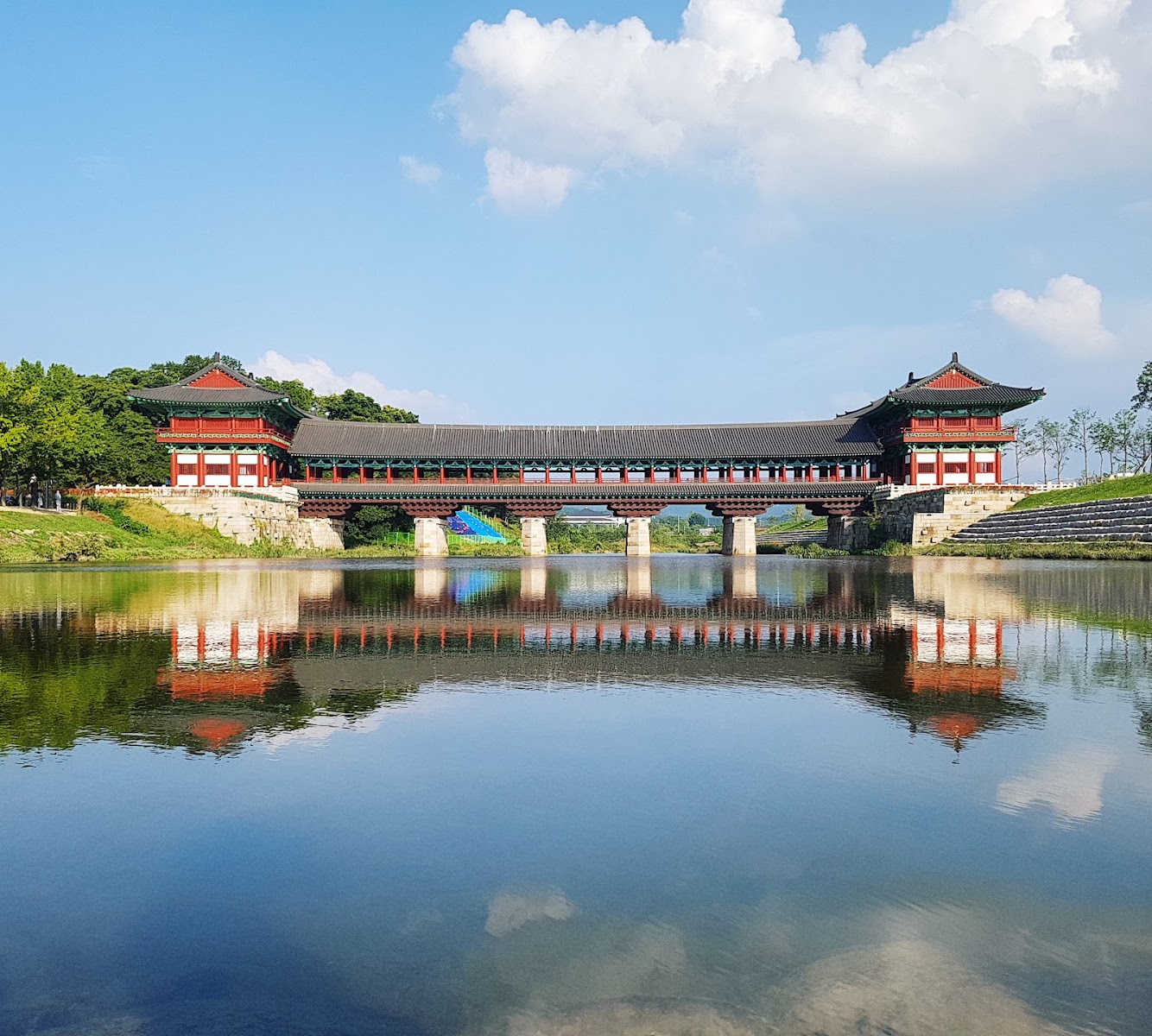
Woljeonggyo Bridge, Gyeongju: A Guide to the City’s Glowing Historic Crossing
At a glance: Woljeonggyo Bridge is a reconstructed Silla-era covered bridge over Namcheon Stream, close to Gyeongju’s traditional Gyochon neighborhood. It is especially striking after dark, when its timber architecture is illuminated. Google lists it at 4.6 stars from 8,895 reviews; ratings and review counts can change.
Address: 48 Gyo-dong, Gyeongju, Gyeongsangbuk-do
Best for: Architecture, history, riverside walks, and evening photography.
Why visit Woljeonggyo?
Gyeongju is known for its Silla-era heritage, but Woljeonggyo offers a different way to encounter that history: not through a tomb or museum display, but by walking across a bridge. Its long, roofed form and warm-toned wooden structure stand out beside Namcheon Stream, making it an appealing stop for anyone exploring the historic center.
The bridge is associated with the Unified Silla period. Historical accounts place its construction in the eighth century, during the reign of King Gyeongdeok. What visitors see today is a modern reconstruction rather than an untouched ancient structure. That distinction matters: the site connects you with Gyeongju’s past, while the present-day bridge is a carefully recreated landmark designed to evoke its historical character.
By day, you can take in the tiled roof, timber details, and setting beside the water. In the evening, illumination gives the bridge a more dramatic presence and reflections may appear on the stream when conditions are calm. Night is a popular time for photographs, so expect to share the viewpoints with other visitors, particularly during busy travel periods.
What to see and do
Take time to look at the bridge from both sides of the stream before crossing. A view from a little distance helps you appreciate its full silhouette; walking across brings you closer to the roof and structural details. The experience is simple and unhurried, so it works well as a short visit or as part of a longer stroll through Gyeongju’s historic neighborhoods.
For photos, consider visiting once in daylight and again after the lights come on, if your schedule allows. Daylight is useful for seeing the woodwork clearly, while the illuminated bridge makes a memorable evening scene. A tripod or careful camera positioning can help in low light, but be considerate of people walking through the area and avoid blocking the path for a long time.
Woljeonggyo is near Gyochon Traditional Village, where you can continue your walk among traditional-style buildings and historic sites. The nearby setting makes it easy to combine the bridge with a broader look at Gyeongju’s old-town atmosphere. Rather than rushing from one photo stop to the next, allow time to wander and notice how the stream, bridge, and surrounding neighborhood fit together.
Planning your visit
The bridge is at 48 Gyo-dong in Gyeongju. Check the map link below for the location and directions from wherever you are staying; this guide does not assume a particular route or transport option. If you are planning an evening visit, confirm current access information through the official Gyeongju site before setting out, as conditions and visitor guidance can change.
There is no need to treat the bridge as a lengthy attraction. Many visitors make it one stop on a walking itinerary, while photography enthusiasts may want extra time to wait for changing light. Wear comfortable shoes for walking around the riverside area, and bring an extra layer on cool or windy evenings. After rain, take care on potentially wet walking surfaces.
Good to know
- Choose your timing: Daytime is best for studying architectural details; evening is popular for illuminated views.
- Expect company after dark: The bridge is a well-known photo spot, so quieter moments may take patience.
- Pair it with a nearby walk: Gyochon Traditional Village is a natural addition to a visit, without needing to make the bridge a standalone day trip.
- Check conditions before you go: Use the official site for the latest visitor guidance rather than relying on old posts for access details.
- Be considerate: Keep walkways clear while taking photos and respect other visitors enjoying the site.
Is Woljeonggyo worth adding to a Gyeongju itinerary?
For most visitors, yes—especially if you are already exploring Gyochon or want an easy evening walk with a strong sense of place. Woljeonggyo is not a substitute for seeing Gyeongju’s archaeological sites, but it adds variety to a history-focused trip. Its combination of reconstructed Silla-era design, riverside setting, and nighttime lighting makes it one of the city’s most memorable places to pause.
FAQ
Is Woljeonggyo Bridge an original Silla bridge?
No. The present bridge is a modern reconstruction of a bridge associated with the Unified Silla period. It recreates the historic character of the site rather than preserving the original structure.
Is the bridge better to visit during the day or at night?
Both offer different experiences. Visit during the day to see the architectural details clearly, or in the evening for the illuminated view. Check current official guidance before planning around a particular time.
What can I visit nearby?
Gyochon Traditional Village is nearby and pairs naturally with a walk to the bridge. You can also explore other historic areas of Gyeongju as part of a wider itinerary.